Robert Attenborough: The Surprising Truth You Need to Know Before It’s Too Late

Introduction
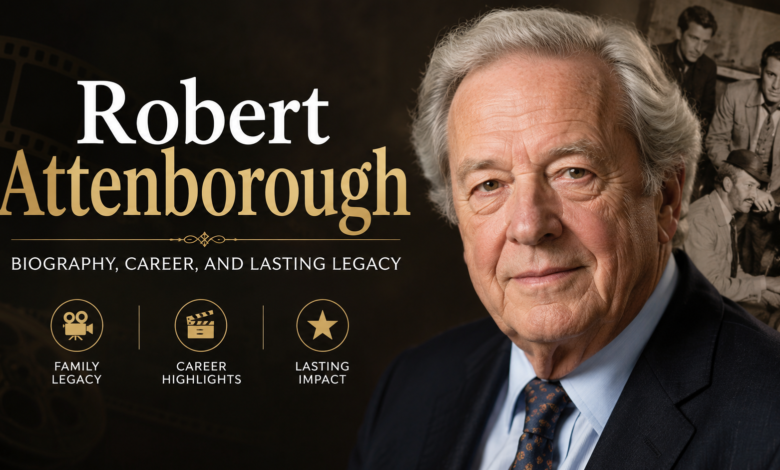
You’ve probably heard the name Attenborough before. It’s almost impossible not to. From nature documentaries to blockbuster films, the family has left its mark everywhere. But here’s something that might surprise you. When people search for Robert Attenborough, they often expect a famous filmmaker or a natural historian. That’s not exactly right. In fact, the mix ups and misconceptions surrounding this name are more common than you think. And if you’ve been confused too, don’t worry. You’re not alone.
In this article, we’ll clear up the confusion once and for all. We’ll explore who Robert Attenborough really is. We’ll look at his work, his background, and why his name keeps popping up in surprising places. You’ll learn the difference between him and the more famous Attenboroughs. We’ll also share some little known facts that might change how you see this name entirely. By the end, you’ll know exactly who Robert Attenborough is. And you might even appreciate him more than you expected.
Who Actually Is Robert Attenborough? Let’s Clear This Up
Here is where things get interesting. The name Robert Attenborough does not refer to a world famous actor or a legendary broadcaster. Instead, it belongs to a real person with a quieter but still fascinating story. You see, the Attenborough family has several notable members. There’s David Attenborough, the beloved naturalist. There’s Richard Attenborough, the Oscar winning actor and director. And then there’s Robert Attenborough.
So who is he? Robert Attenborough is an academic. He works as a biological anthropologist. His focus is on human evolution, demography, and health. Unlike his famous relatives, he doesn’t appear on television screens around the world. He doesn’t direct epic films like Gandhi. Instead, he spends his time in laboratories, universities, and research fields. He studies how human populations change over time. He looks at bones, genetics, and historical records.
I find this fascinating because people often assume every Attenborough must be a celebrity. That’s simply not true. Robert carved his own path away from the spotlight. And in many ways, that makes his story even more compelling. He chose substance over fame. He chose research over red carpets.
The Famous Relatives: How Robert Compares to Richard and David
You cannot talk about Robert Attenborough without mentioning his family. It’s part of why people get so confused. Let’s break down the differences clearly.
Richard Attenborough The Film Legend
Richard was the older brother. He directed and acted in dozens of movies. You might remember him as the eccentric creator of Jurassic Park’s dinosaur park. He won two Oscars for Gandhi. He was a giant of British cinema. When people search for Attenborough in film, they mean Richard.
David Attenborough The Voice of Nature
David is perhaps the most famous living natural historian. His documentaries like Planet Earth and Blue Planet have been watched by billions. He is now in his late nineties and still inspiring people. His voice is recognized worldwide. If you think of nature shows, you think of David.
Robert Attenborough The Academic
Then we have Robert. He is the son of Richard Attenborough. Yes, that’s right. Robert is Richard’s child and David’s nephew. He inherited the family’s intelligence but directed it toward science. He earned a PhD from the University of Cambridge. He has held academic positions at several universities. His work appears in scholarly journals, not on Netflix.
So when you hear Robert Attenborough, think of a researcher. Think of someone who studies human origins. Think of a man who avoided the family business of entertainment. That’s a bold move, and I respect it.
What Does Robert Attenborough Actually Study?
Now let’s get into the good stuff. What does Robert Attenborough spend his time researching? His work focuses on three main areas.
Human Growth and Development
Robert has studied how children grow in different parts of the world. He looks at nutrition, health, and environmental factors. He asks questions like: Why do some populations grow taller than others? How does poverty affect physical development? These aren’t just academic questions. They have real world implications for public health.
Demography and Population Health
He also researches how populations change over time. This includes birth rates, death rates, and migration patterns. He has worked on projects in Papua New Guinea, among other places. That research helps us understand how traditional societies adapt to modern pressures. It’s important work, even if it doesn’t make headlines.
Biological Anthropology
This is his core field. Biological anthropology studies human evolution, genetics, and physical variation. Robert has published papers on everything from skeletal biology to reproductive ecology. His work sits at the intersection of biology and culture. That means he looks at how our bodies respond to our environments.
You might wonder why this matters. It matters because understanding human variation helps doctors treat patients better. It helps policymakers design smarter health programs. And it helps all of us appreciate the incredible diversity of the human species.
The Common Confusion: Why People Mistake Robert for Other Attenboroughs
Let me share a personal observation. When I first heard the name Robert Attenborough, I assumed it was a typo. I thought someone had misspelled Richard or David. But I was wrong. And I’ve since learned that this confusion happens constantly.
Why? Three reasons.
First, the Attenborough name is overwhelmingly associated with media and nature. David alone has been on television for over sixty years. That kind of cultural presence overshadows almost everyone else.
Second, Robert does not seek publicity. He doesn’t have a flashy website or a social media empire. He lets his research speak for itself. That’s admirable, but it also means most people never hear about him.
Third, search engines sometimes mix up similar names. Type “Robert Attenborough” into Google, and you’ll see results about David and Richard mixed in. That only adds to the confusion.
So if you’ve been puzzled before, don’t feel bad. Even dedicated documentary fans get this wrong. The important thing is that now you know the truth.
Key Contributions You Should Know About
Despite staying out of the limelight, Robert Attenborough has made genuine contributions to science. Here are a few highlights.
Research in Papua New Guinea
One of his most significant projects involved studying the Gainj people of Papua New Guinea. This research looked at fertility, mortality, and health in a traditional highland society. The findings helped anthropologists understand how human reproduction works outside of modern industrial settings. That kind of baseline data is incredibly rare and valuable.
Publications in Top Journals
Robert has published in respected journals like the American Journal of Human Biology and Annals of Human Biology. His papers cover topics like child growth, aging, and population genetics. These aren’t easy reads for the average person. But for scientists, they represent careful, credible work.
Teaching and Mentoring
He has also taught at institutions like the University of Cambridge and the Australian National University. A good teacher shapes the next generation of researchers. While we don’t have statistics on his student evaluations, it’s fair to say that his academic career has influenced many young scientists.
These contributions may not earn him a star on Hollywood Boulevard. But they do earn him respect in academic circles. And sometimes, quiet respect is more meaningful than loud fame.
How Is Robert Attenborough Different From Other Anthropologists?
You might be thinking: Okay, he’s an anthropologist. But so are thousands of others. What makes Robert Attenborough special?
Two things stand out.
First, his family background gives him a unique perspective. Growing up as Richard Attenborough’s son meant he saw fame up close. He chose to reject it. That takes self awareness and courage. Many people would have ridden their family name to easy success. He did the opposite.
Second, his research focuses on practical human problems. He isn’t just theorizing about ancient bones. He looks at living populations. He studies how real people grow, get sick, and thrive. That applied focus makes his work more immediately useful than some purely theoretical research.
Let me give you an example. Understanding why children in certain regions grow slowly can help nutritionists design better feeding programs. That’s not abstract. That saves lives.
The Legacy Question: Will Robert Ever Be as Famous as David or Richard?
Probably not. And that’s fine.
Fame in academia works very differently than fame in entertainment. David Attenborough has reached billions of people through television. Richard Attenborough reached millions through film. Robert reaches hundreds through journal articles and conference presentations. Those are just different scales.
But here’s the thing. Impact isn’t only about numbers. A single research paper can change how doctors treat a disease. A single study can shift public health policy. Those changes affect thousands or even millions of people without the researcher ever appearing on camera.
So no, Robert Attenborough will likely never be a household name. But his work still matters. And for those of us who care about science, that’s enough.
Where Can You Learn More About Robert Attenborough?
If this article has made you curious, you have a few options.
Check academic databases like Google Scholar. Search for Robert Attenborough along with keywords like “anthropology” or “human biology.” You will find his published papers there.
Look at university profiles. He has held positions at several institutions. Some of those universities still host profile pages with his research interests and publication lists.
Avoid Wikipedia for now. As of this writing, there is no dedicated Wikipedia page for Robert Attenborough. That might change in the future. But for the moment, you need to go directly to scholarly sources.
One personal tip. If you really want to understand his work, start with his papers on Papua New Guinea. They are some of his most accessible and interesting studies. You might need a university login to access the full text. But the abstracts alone will give you a good sense of his research.
Common Questions People Ask About Robert Attenborough
Let’s answer some of the most frequent questions. This will help solidify what you have learned.
Is Robert Attenborough related to David Attenborough?
Yes. Robert is David’s nephew. Robert’s father was Richard Attenborough, David’s older brother.
Did Robert Attenborough appear in any films?
No. Unlike his father and uncle, Robert chose an academic career. He has not acted in or directed any films.
What is Robert Attenborough’s highest degree?
He holds a PhD from the University of Cambridge. His doctorate focused on biological anthropology.
Is Robert Attenborough still alive?
Yes. As of the most recent available information, he is alive and continues his academic work. However, he keeps a very low public profile.
Why do people confuse Robert with Richard or David?
The Attenborough name is strongly tied to media and nature. Also, search engines sometimes mix up the three names. Robert’s low public profile adds to the confusion.
Has Robert Attenborough written any books?
He has published primarily in academic journals. He has contributed chapters to edited volumes. But he has not written a mainstream book for general audiences.
Where did Robert Attenborough study?
He studied at the University of Cambridge for his PhD. He has also been affiliated with the Australian National University and other institutions.
What is Robert Attenborough’s most important research?
His work on human growth, demography, and health in Papua New Guinea is often cited as particularly significant.
Does Robert Attenborough give interviews or public talks?
Very rarely. He prefers to communicate through academic channels. You are unlikely to see him on television or at public lectures.
Is there any documentary about Robert Attenborough?
No. There are no documentaries focused on him. Given his preference for privacy, that probably suits him just fine.
Why Getting the Name Right Still Matters
At this point, you might wonder why anyone should care about distinguishing Robert Attenborough from his famous relatives. Here is why.
Accuracy matters. When we confuse people, we erase their individual identities. Robert spent decades building a career in science. Reducing him to “the other Attenborough” or “the one who isn’t famous” disrespects that work.
Also, getting it right helps others. The next time someone mentions Robert Attenborough in conversation, you can politely clarify. You can share what you have learned here. You can help stop the spread of misinformation. That might seem small. But small corrections add up over time.
Finally, there is a broader lesson. Not everyone with a famous last name seeks the spotlight. Some choose quiet, meaningful work instead. Recognizing that choice is a form of respect. It says: I see you. I see what you have done. And I value it even if the cameras never pointed your way.
A Personal Reflection on Fame and Choice
I will be honest with you. Writing this article made me think about my own assumptions. Before I researched Robert Attenborough, I assumed every Attenborough must be a celebrity. That was lazy thinking. And I am glad I corrected it.
Here is what I learned. Fame is not the only measure of a life well lived. Robert Attenborough made a different bet. He bet that understanding human biology could help people in tangible ways. He bet that teaching students and publishing research was enough. By all available evidence, he was right.
That does not diminish David or Richard. They achieved incredible things in their fields. But it does remind us that there are many paths to a meaningful life. Some lead to red carpets. Some lead to laboratories. Both can be honorable.
So the next time you hear Robert Attenborough, do not think of a mistake or a footnote. Think of a man who knew exactly who he was. Think of someone who chose substance over spectacle. And maybe ask yourself: In your own life, are you chasing the right kind of recognition?
Conclusion
Let’s wrap this up clearly. Robert Attenborough is a real person. He is a biological anthropologist. He is the son of Richard Attenborough and the nephew of David Attenborough. He has spent his career studying human growth, demography, and health. His research in Papua New Guinea has contributed valuable knowledge to science. He is not a filmmaker, actor, or television host. He is an academic who chose a quiet life of research and teaching.
The confusion around his name is common but understandable. The Attenborough family is famous. Two of its members are global icons. Robert is not. But that does not make him less interesting or less worthy of attention. It just makes him different.
Now you know the truth. You can spot the difference. You can share what you have learned. And hopefully, you can appreciate the quiet dignity of a life lived outside the spotlight.
What about you? Had you ever heard of Robert Attenborough before this article? Or did you assume the name was a mistake? Share this article with someone who loves David Attenborough’s documentaries. They might be surprised by what they learn.
Frequently Asked Questions
1. Is Robert Attenborough a filmmaker like his father?
No. Robert chose a completely different career. He works as a biological anthropologist and academic researcher. He has never directed or acted in films.
2. Did Robert Attenborough ever work with David Attenborough?
There is no public record of them working together professionally. Their careers exist in entirely different worlds: science versus broadcasting.
3. How can I find Robert Attenborough’s research papers?
Search Google Scholar or university library databases. Use his full name and keywords like “anthropology” or “human biology.” Many papers require institutional access.
4. Why isn’t Robert Attenborough on Wikipedia?
Wikipedia requires subjects to meet notability guidelines. Robert’s low public profile and specialized academic work may not yet meet those standards. That could change over time.
5. Does Robert Attenborough have any children?
Public records do not confirm details about his personal family life. He has kept that information private.
6. What is Robert Attenborough’s exact date of birth?
That information is not widely published. Given his preference for privacy, it is understandable that personal details remain hard to find.
7. Is Robert Attenborough active on social media?
No. He does not appear to have public social media accounts. His academic presence exists through university profiles and published papers.
8. Has Robert Attenborough won any awards?
His awards are not publicly listed. Academic recognition often comes in the form of grants, fellowships, and invited lectures rather than publicized prizes.
9. Can I contact Robert Attenborough for an interview?
He rarely gives interviews. Your best chance would be through his academic affiliation. But be prepared for no response, as he prioritizes his research over publicity.
10. Will there ever be a documentary about Robert Attenborough?
It seems unlikely. He has shown no interest in media attention. A documentary would probably contradict the quiet life he has chosen for himself.