Beyond the Headlines: The Multifaceted Life of Putri Gayatri Pertiwi

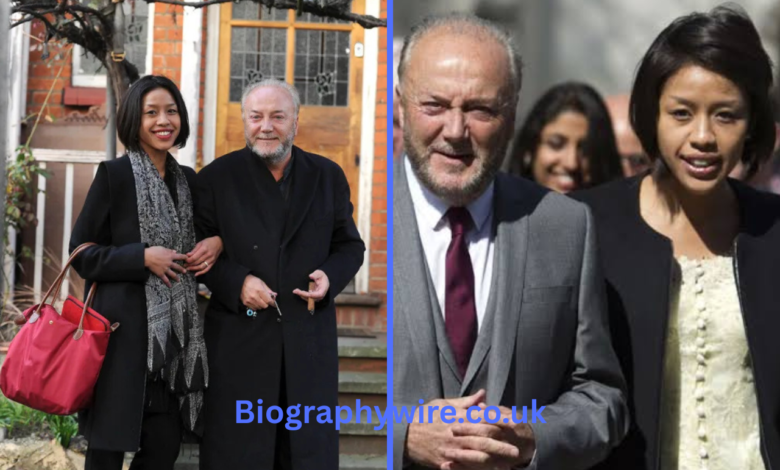
In an era where public figures are often defined by their thirty-second sound bites or their most controversial headlines, few personalities manage to retain an air of mystery while simultaneously building a portfolio of work that spans continents and causes. Putri Gayatri Pertiwi is one such individual. You might recognize her as the woman standing steadfastly beside British politician George Galloway during his dramatic return to the House of Commons, her nails painted in the colors of the Palestinian flag as a silent gesture of solidarity. But to reduce her story to a single photograph or a political affiliation would be to ignore a life lived with fierce independence, intellectual curiosity, and a deep-seated drive to document the truth. From the polders of the Netherlands to the bustling newsrooms of London, and from the hallways of the United Nations to the red carpets of documentary film premieres, Putri Gayatri Pertiwi has crafted a life that is as complex as it is compelling. This is the story of a producer, an anthropologist, a mother, and a woman navigating the intersection of culture, politics, and media.
To understand her journey, we must first look at the facts that frame her public profile. Here is a quick snapshot of the essential details regarding the life and career of Putri Gayatri Pertiwi.
| Quick Info | Details |
|---|---|
| Full Name | Putri Gayatri Pertiwi |
| Age / Born | February 1985 (Age 39-40 as of 2025) |
| Profession | Documentary Producer, Film Director, Cultural Anthropologist, Media Consultant, Company Director |
| Nationality | Indonesian / Dutch |
| Education | University of Utrecht (Cultural Anthropology / Cultural Heritage) |
| Famous For | Producing The Killing$ of Tony Blair (2016) and Killing Kelly (2021); Co-hosting Sputnik TV show; Marriage to George Galloway |
| Spouse | George Galloway (m. 2012) |
| Children | Toren Mustaqim (b. 2014), Orla Dhien (b. 2017), Oban Amaria (b. 2020) |
| Residence | United Kingdom |
| Net Worth (Est.) | $1 Million – $3 Million (Estimated from production work, media consulting, and directorial roles) |
| Social Media | Limited public presence; primarily low-key in comparison to her spouse |
A Transcontinental Childhood and Academic Roots
To understand the worldview of Putri Gayatri Pertiwi, one must first look at the unique geography of her upbringing. Born in the Netherlands to Indonesian heritage, Pertiwi was raised in a bicultural household that straddled the progressive, pragmatic values of Northern Europe and the rich, familial traditions of the Malay archipelago . This duality is essential to understanding her later work; she has always been an observer of cultural collisions, adept at navigating different social codes depending on the room she walks into. Growing up as a Dutch-Indonesian woman offered her a lens that was neither fully European nor fully Asian, but a hybrid perspective that allowed her to analyze power structures, colonial histories, and identity politics with a unique sense of detachment and clarity.
Driven by a desire to understand the “why” behind human behavior—specifically why societies clash and cultures mix—Pertiwi pursued higher education at the prestigious University of Utrecht. Here, she immersed herself in the world of Cultural Anthropology . This was not merely an academic pursuit; for Putri, anthropology was the key to unlocking the complexities of the human condition. She studied cultural heritage, learning how objects, memories, and narratives are passed down through generations. This background is crucial because it directly informs her later career as a documentary filmmaker. While a journalist might chase a deadline, an anthropologist chases context. Her time at Utrecht taught her to sit in the discomfort of ambiguity, to listen for the subtext, and to recognize that every political crisis has a cultural root. Before she ever picked up a camera or stepped onto a political stage, Putri Gayatri Pertiwi was already a documentarian of human life, observing the rituals and power dynamics of the world around her with a scholar’s eye.
From Academia to Activism and Advocacy
Before the glitz of film festivals and the chaos of Westminster politics, Putri Gayatri Pertiwi was deeply involved in grassroots activism, specifically regarding the rights of women and children. During her university years and shortly after graduating, she began consulting for a Dutch research firm, applying her academic training to real-world sociological problems . However, it was her volunteer work that set the stage for her future. She became actively involved with Viva Palestina, a charity aid convoy movement founded by George Galloway designed to break the siege of Gaza .
It is easy to look back at 2011 and 2012 and see the narrative of a fairytale romance—or, as critics suggest, a merger of political minds—but for Putri, her involvement with the charity was a natural extension of her anthropological interests. She was not just a bystander; she was an organizer, a coordinator, and a logistics expert. She helped move aid through hostile territories, demonstrating a level of bravery and organizational skill that went far beyond the role of a “supportive spouse.” This work was dangerous, stressful, and thankless. It was here, amid the geopolitical fallout of the Middle East, that she proved her mettle as a humanitarian. This dedication to the Palestinian cause would later become a defining visual motif of her public appearances, such as her symbolic nail art at her husband’s parliamentary swearing-in ceremony in 2024 .
The Unconventional Union: Marriage and Partnership
The personal life of Putri Gayatri Pertiwi became international news on March 31, 2012. Just forty-eight hours after George Galloway secured a shock victory in the Bradford West by-election, the couple held an Islamic ceremony in Amsterdam . The timing was either wildly romantic or strategically pragmatic, depending on one’s perspective, but it undeniably placed Putri at the center of a media firestorm. She was 27 at the time, and her new husband was a famously controversial figure thirty years her senior . The union was immediately scrutinized. The couple didn’t stop at one ceremony, however. To honor her heritage, they held a traditional Javanese ceremony in Sumatra, Indonesia, followed by a civil ceremony in the House of Commons later that September .
The early years of their marriage were defined by a frenetic pace. George Galloway was at the peak of his “rock star” political phase, moving between reality TV (Celebrity Big Brother), parliament, and talk radio. For Putri, this was a baptism by fire. She transitioned from a consultant and academic into a media personality almost overnight. She began co-presenting Sputnik, a current affairs show on the Russian network RT (formerly Russia Today), where she held her own in debates about global geopolitics . The show was eventually cancelled in the wake of the Russian invasion of Ukraine, but her time on air sharpened her communication skills, transforming her from an academic anthropologist into a polished television presenter.
The couple’s love story is also deeply intertwined with parenthood. Putri has given birth to three children: a son, Toren Mustaqim (b. 2014), followed by daughters Orla Dhien (b. 2017) and Oban Amaria (b. 2020) . Despite the chaos of their professional lives—the documentary screenings, the political campaigns, the legal battles—Pertiwi has consistently emphasized the grounding nature of motherhood. In interviews, Galloway has credited her for keeping him youthful and grounded, noting that nothing rejuvenates a person like small children “climbing over your face in the morning” . For Putri, balancing the role of a mother of three with the rigorous demands of film production requires a discipline that speaks volumes about her character.
Documenting Power: The Career as a Filmmaker
While much of the media focus remains on her marriage, the professional career of Putri Gayatri Pertiwi as a producer and director stands on its own merits. She is not merely a muse or a spouse; she is a storyteller with a specific point of view. In 2015, she registered Molucca Media Limited, a production company through which she channels her creative and political energy . The following year, she released her most controversial and well-known work: The Killing$ of Tony Blair .
The title itself is a provocation. The documentary explores the legacy of the former UK Prime Minister, specifically his role in the Iraq War, his financial dealings after leaving office, and his impact on the Labour Party. For Putri, this was not just a hit piece; it was an anthropological autopsy of power. She utilized her academic training to dissect how a single leader could shape—and shatter—an entire political ecosystem. The film was lauded by anti-war activists and derided by Blairites, but regardless of political alignment, the production value and tenacity of the research were undeniable. She followed this up with Killing Kelly in 2021, a deep dive into the mysterious death of Dr. David Kelly, the British weapons expert who died amid the fallout of the Iraq War dossier scandal .
In these works, one can see the auteur style of Putri Gayatri. Her films are characterized by a forensic attention to detail, a distrust of official narratives, and a deeply humanist approach to the victims of political violence. She is interested in justice, but not necessarily the justice of the courtroom; rather, the justice of historical record. She is preserving a version of history that she feels is being erased by mainstream media.
A Different Putri Gayatri: The Social Advocate
Intriguingly, search results reveal a different individual also named Putri Gayatri—a young Indonesian student and disability rights activist from Bandung who spoke at the UN General Assembly in 2015 . While this is a separate person (a teenager at the time, whereas the subject of this article was in her late 20s), the coincidence of names highlights the values associated with the Indonesian cultural sphere: advocacy, education, and resilience. It serves as a reminder of the power of the name “Gayatri”—derived from a Vedic mantra representing knowledge and wisdom.
For our Putri Gayatri Pertiwi, the Indonesian connection remains vital. Her ability to flit between the Javanese courts (for her wedding) and the London political scene speaks to a globalized elite status, but she has not forgotten her roots in cultural heritage. She continues to use her platform to highlight Eastern perspectives within Western political discourse, often acting as a bridge between the two worlds.
Financial Standing and Net Worth
Discussing the net worth of Putri Gayatri Pertiwi requires a look at her diverse portfolio. Unlike many political spouses who rely solely on their partner’s salary, Putri has maintained an active professional life. Her income streams are threefold. First, there is her work as a producer and director through Molucca Media Limited, generating revenue from film sales, streaming rights, and distribution of The Killing$ of Tony Blair and Killing Kelly . Second, there are her consulting fees; with a background in research and anthropology, she has commanded respectable rates for corporate and political consulting. Third, there is the joint income from media appearances and the Galloway media network, which includes podcasts and YouTube channels.
Estimates place her net worth roughly between $1 million and $3 million. This is not the exorbitant wealth of a Hollywood mogul, but it reflects a comfortable, upper-middle-class standing in the UK, where she resides . It is a wealth built on intellectual property rather than inheritance, suggesting a steady, slow-burn career rather than a sudden explosion of fame.
Social Media Presence and Public Interaction
In an age of oversharing, Putri Gayatri Pertiwi is a notable exception. Her social media presence is minimal, especially when compared to her husband, who uses X (formerly Twitter) as a primary weapon of political warfare. Putri seems to value her privacy deeply. She does not flood feeds with selfies or family photos. When she does appear online, it is usually through the lens of her work—promoting a documentary, highlighting a charity event, or making a subtle political statement (such as the aforementioned nail art that went viral in 2024) .
This scarcity of digital footprint actually enhances her mystique. In a world where we know what celebrities eat for breakfast, Putri remains an enigma. This calculated distance allows her to transition between roles—mother, producer, political wife—without the baggage of a TikTok controversy. She lets her work speak for itself, and when she does choose to appear in public, the impact is far greater because of her relative silence.
Recent Updates and the Future
The most recent surge in public interest regarding Putri Gayatri Pertiwi occurred in early 2024, following her husband George Galloway’s stunning victory in the Rochdale by-election . As Galloway returned to parliament, Putri was there, physically present in the chambers, serving as a visual anchor for his political brand. Her presence signals stability, multiculturalism, and a fierce protective instinct over their shared political legacy.
Looking forward, the future for Putri is likely less about Westminster politics and more about the production studio. With the UK media landscape shifting toward independent, subscription-based content, there is a growing market for the kinds of investigative documentaries she produces. There is speculation that she is currently working on a third feature documentary, potentially exploring the impact of the recent conflicts in Gaza on diaspora communities. If her past work is any indicator, she will continue to chase the “uncomfortable” stories—the ones the mainstream media is afraid to touch. She is building a legacy not as a politician’s wife, but as a custodian of difficult truths.
Conclusion: A Legacy of Resilience and Perspective
The story of Putri Gayatri Pertiwi is not merely a footnote in the biography of a famous man. It is the story of a modern renaissance woman—part scholar, part warrior, part artist. She has navigated the choppy waters of political infamy, the relentless ticking clock of motherhood, and the creative struggles of independent filmmaking with a quiet, unshakeable confidence. She represents the archetype of the woman who builds rather than borrows power. By leveraging her background in anthropology, she brings a humanistic depth to political discourse that is often lacking in the screaming matches of cable news.
What can we learn from her journey? Perhaps it is the importance of context. Putri teaches us that before you judge a headline, you must look at the history behind it. She reminds us that resilience is often quiet—it is the act of getting up to produce a film when the critics are loud, or showing up to a charity convoy when the road is dangerous, or simply raising three children while the world debates your husband’s rhetoric.
As Putri Gayatri Pertiwi continues to pave the way for future generations of female filmmakers and global citizens, her story stands as a reminder of how resilience, intelligence, and a strong sense of cultural identity can shape a meaningful legacy. In a world obsessed with simplification, she remains gloriously complex—a producer, a mother, an anthropologist, and a woman utterly unafraid to stand in the fire.