Introduction
If you spend any time around the British media and advertising world, you quickly realize that the most influential people are rarely the ones you see on screen. Nigel Sharrocks is a perfect example. He has spent more than four decades shaping how films get distributed, how advertising reaches audiences, and how television viewing is measured in the UK, and yet most people outside the industry have never heard his name.
That is not a failure on his part. It is a deliberate choice. Nigel Sharrocks has always been more comfortable building things behind the scenes than standing in front of a camera. His career has taken him from the creative chaos of 1980s London advertising agencies to the boardrooms of Hollywood studios, global media networks, and industry-defining organizations. Along the way, he has helped launch companies, steer billion-pound mergers, and guide some of the most important institutions in British media.
This article covers who Nigel Sharrocks is, where he came from, what he has built, and why his story matters to anyone who wants to understand how the UK media industry actually works.
Who Is Nigel Sharrocks?
Nigel Sharrocks is a British media executive born in August 1956. He has held senior roles across advertising, film distribution, cinema advertising, and audience measurement over a career spanning roughly four decades. If you were to map his professional journey on a timeline, you would see a clear thread running through all of it: a talent for leading organizations through change.
His name appears in Companies House records across 35 appointments. These range from early advertising agency roles in the 1990s to active board positions he still holds today. That scale of involvement tells you something important. Organizations do not keep inviting the same person back unless that person consistently delivers results.
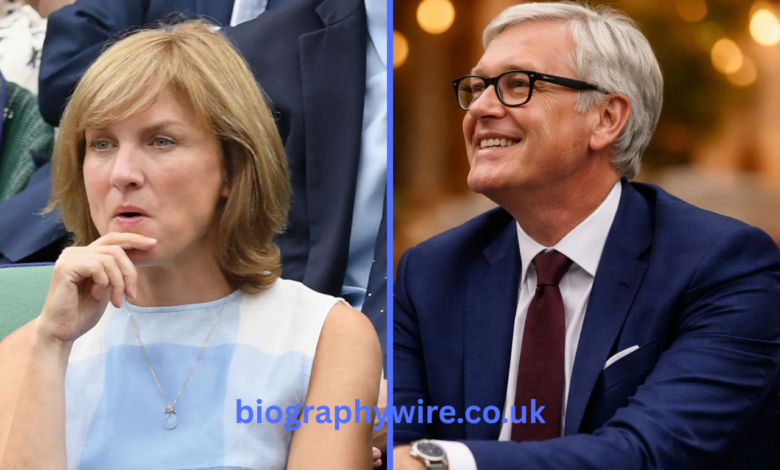
You might also know him, indirectly, through his marriage to Fiona Bruce, one of the BBC’s most recognizable presenters. The couple met while working at the advertising agency Boase Massimi Pollitt, known as BMP, and married in 1994. They have two children together. Despite his wife’s very public career, Sharrocks has consistently kept his own personal life out of the spotlight, which is itself a kind of achievement in today’s media environment.
Early Career: Building Foundations in 1980s Advertising
Every substantial career has a starting point that shapes everything that follows. For Nigel Sharrocks, that starting point was the advertising industry of the 1980s, a period when British advertising was genuinely exciting and creatively ambitious.
He began his career at BMP, the agency now known as DDB London, working as Media Director in the agency’s media department. This was a formative environment. BMP was celebrated for its analytical approach to advertising, and the media department in particular was known for rigorous thinking about how campaigns reached audiences. Working there taught Sharrocks to think carefully about both the creative and commercial sides of media.
From there, he moved to Grey Advertising, where he served as Managing Director. Grey was a large international agency with serious clients and serious budgets. Running it required not just advertising knowledge but genuine management capability. Sharrocks was developing exactly the kind of broad commercial skill set that would define his later career.
Launching MediaCom: A Defining Moment
One of the most significant things Nigel Sharrocks did in the early part of his career was help found MediaCom in the early 1990s. This came out of the Grey media department, which he helped transform into a standalone media agency.
MediaCom grew into one of the largest media planning and buying agencies in the world. If you are not familiar with what media agencies do, think of them as the organizations that decide where advertising money gets spent, which TV slots to buy, which newspapers to advertise in, which digital platforms to target, and how much to pay for each. Getting those decisions right, at scale, requires sophisticated data analysis, strong client relationships, and a clear strategic vision.
Sharrocks went on to become Chairman of MediaCom. His early involvement in building and shaping that company gave him credibility across the entire advertising industry. It is one thing to lead a company someone else started. It is another thing entirely to help create an organization from the ground up and watch it become a global force.
Warner Bros. Pictures UK: From Advertising to Hollywood
In 1999, Nigel Sharrocks made a move that surprised some people in the advertising world. He left his position in media agencies and joined Warner Bros. Pictures UK as Managing Director. It was a significant career pivot, crossing from the advertising side of media into the entertainment industry.
The timing turned out to be remarkable. During his time at Warner Bros., Sharrocks oversaw the UK release of more than 150 films. That list included two of the most culturally significant film franchises of the early 2000s. The Harry Potter series launched in 2001 and became a global phenomenon. The Matrix films, which had already begun before his tenure, continued to define blockbuster cinema during this period.
Managing the UK release of a film like Harry Potter and the Philosopher’s Stone involves far more than simply putting it in cinemas. You are coordinating with major cinema chains, managing marketing budgets, negotiating distribution terms, timing releases against competitors, and responding to the kind of public excitement that very few films generate. Sharrocks handled all of that across a portfolio of well over a hundred titles.
His time at Warner Bros. gave him something valuable that purely advertising-focused executives rarely have: direct experience of how the entertainment industry thinks and operates. That understanding of film, audiences, and cinema culture would prove extremely useful in the chapters that followed.
Aegis Media: Leading Global Brands Across Borders
After leaving Warner Bros. in 2004, Nigel Sharrocks returned to the media agency world by joining Aegis Media. He eventually rose to become Chief Executive of Aegis Media Global Brands, a role that put him in charge of major agency networks including Carat, Vizeum, and Posterscope.
Carat is one of the world’s largest media planning and buying agencies. Vizeum was a global media agency built around digital strategy. Posterscope specializes in out-of-home advertising, covering everything from billboards to digital screens in public spaces. Together, these represented an enormous commercial operation managing billions of pounds in advertising spend across multiple markets.
Leading these networks meant managing not just commercial performance but organizational culture, talent development, and strategic direction across different countries and industries. Aegis itself was growing rapidly during this period, transforming from a UK-focused business into a genuinely global competitor.
The story reached a dramatic conclusion in 2013 when Dentsu, the Japanese communications giant, acquired Aegis in a deal valued at over three billion pounds. It was one of the largest transactions in the history of the global advertising industry. Sharrocks had been at the heart of Aegis through its years of growth and was there when the company reached its most significant moment. His role then evolved to EMEA CEO of Dentsu Aegis, where he helped transform what had been a UK-based business into a key digital growth engine for the Japanese parent company.
BARB: Measuring What People Actually Watch
In October 2013, Nigel Sharrocks took on a different kind of role. He was appointed Non-Executive Chairman of BARB, the Broadcasters’ Audience Research Board.
You might not have heard of BARB, but you have certainly encountered its work. BARB is the organization responsible for measuring television audiences in the UK. Every time you read a headline about how many people watched a particular TV programme, or how the BBC’s viewership compared to ITV’s on a given evening, those numbers came from BARB.
Getting audience measurement right matters enormously. Broadcasters use BARB data to understand what their audiences want. Advertisers use it to decide where to spend their money. Programme commissioners use it to decide what to commission and what to cancel. The entire ecosystem of British television is partly organized around BARB’s figures.
Sharrocks took over as Chairman from Nigel Walmsley, who had held the role for eleven years. He was selected after a competitive interview process, with the IPA’s Director General Paul Bainsfair describing him as someone with “a rich heritage of business leadership” who was “a highly-respected figure in the agency and marketing community.” The challenge for BARB at that point was adapting to a world where audiences were increasingly watching content on demand, on multiple devices, and on platforms that traditional measurement approaches were not designed to capture.
Digital Cinema Media: Reinventing the Big Screen
Also in 2013, Nigel Sharrocks was appointed Non-Executive Chairman of Digital Cinema Media, known as DCM. This role brought his career full circle in an interesting way, combining his advertising expertise with his understanding of cinema gained at Warner Bros.
DCM is the UK’s leading cinema advertising company. It handles advertising for major cinema chains including Odeon, Cineworld, Vue, and Picturehouse, covering more than 2,900 screens across over 480 sites. When you sit in a cinema and watch advertisements before the film begins, there is a very good chance that DCM was involved in placing them there.
The challenge Sharrocks took on at DCM was not a small one. Cinema advertising occupies a peculiar position in the media landscape. The audiences are highly engaged, the screen is enormous, and the viewing environment is distraction-free in a way that no other media format can match. But cinema had not always been treated as a premium advertising environment, and the industry faced growing pressure as streaming services began to change how people thought about film.
Simon Rees, CEO at DCM, said at the time of Sharrocks’s appointment that bringing him in reflected the company’s commitment to growing and innovating, and that his experience and reputation across all aspects of the business would be “invaluable.” Sharrocks himself described being drawn back to two industries he loved, media and film, as part of his attraction to the role.
Under his leadership, DCM has pursued a strategy of positioning cinema as a unique and powerful advertising medium, one that offers something television and digital platforms cannot replicate.
Silver Bullet and Ongoing Board Work
Beyond his headline roles, Nigel Sharrocks has maintained involvement with other companies through non-executive and advisory positions. He has been connected with Silver Bullet Data Services Group, a data-driven technology company working at the intersection of marketing and analytics.
This involvement reflects an important strand in his career thinking. Sharrocks has consistently moved toward companies that sit at the intersection of media and data, recognizing early that the future of the industry would be shaped by the ability to understand audiences in increasingly precise ways. At a time when many media executives were still primarily focused on relationships and creativity, Sharrocks was also thinking about measurement, analytics, and the commercial value of audience intelligence.
His record of 35 appointments across a long career shows someone who has been trusted by a wide variety of organizations to contribute strategic thinking and governance at board level. That kind of sustained confidence from multiple organizations does not happen by accident.
Leadership Philosophy and Industry Impact
What makes Nigel Sharrocks’s career genuinely interesting is not just the list of impressive companies on his resume. It is the pattern of how he has moved between industries and roles.
He has repeatedly demonstrated a willingness to cross boundaries that other executives tend to stay within. Most advertising executives stay in advertising. Most film executives stay in film. Sharrocks moved between the two, and brought insights from each world into the other. His understanding of advertising made him better at film distribution. His experience in film made him a more credible voice in cinema advertising.
He has also shown a consistent interest in the infrastructure of the media industry rather than just the commercially glamorous parts of it. Chairing BARB is not the kind of appointment that gets you on magazine covers. It is the kind of appointment you take because you understand that the systems underpinning an industry matter as much as the brands operating within it.
At the Media Leader Summit in 2024, Sharrocks appeared in a fireside chat discussing lessons in leadership learned over his long career. The session description captured something true about his trajectory: he had navigated relationships with Tom Cruise and Al Pacino at Warner Bros. just as comfortably as he had navigated relationships with ITV and the Daily Mail in advertising. That range of experience, across creative talent, corporate clients, regulatory bodies, and financial stakeholders, is genuinely unusual.
Personal Life: A Grounded Partnership
Nigel Sharrocks and Fiona Bruce have been married for over thirty years. They met at BMP, where Bruce was working as a junior researcher before her television career took off. Their relationship developed through a shared professional world, though their careers quickly took very different directions, with Bruce moving into television journalism and Sharrocks continuing to build his career in media and advertising business.
The couple is known for maintaining a grounded family life despite the pressures and public visibility that come with Fiona Bruce’s role at the BBC. Sharrocks has rarely sought media attention for its own sake, and the family has kept a notably private profile given the public nature of his wife’s work.
That restraint is, in its own way, consistent with the broader pattern of Sharrocks’s career. He has always seemed more focused on building things and getting results than on personal visibility or recognition.
What Nigel Sharrocks Teaches Us About Media Leadership
There are real lessons in how Nigel Sharrocks has built his career, and they apply beyond the specific world of British media.
First, breadth matters. Specializing deeply in one area has value, but the executives who tend to have the longest and most influential careers are often those who develop genuine understanding across multiple areas. Sharrocks’s movement between advertising, film, cinema, and data gave him perspectives that purely siloed executives simply do not have.
Second, infrastructure work is undervalued. The roles at BARB and DCM might seem less glamorous than running a global agency, but they gave Sharrocks influence over the systems that the entire industry depends on. If you want to shape an industry, getting involved in its infrastructure is one of the most powerful ways to do it.
Third, longevity requires adaptation. The advertising industry of the 1980s was entirely different from the data-driven, digitally transformed landscape of the 2020s. Sharrocks has remained relevant across both by continuously updating his understanding and moving toward the areas where change is happening rather than away from them.
Conclusion
Nigel Sharrocks represents a particular kind of excellence in British media: deep expertise built quietly over decades, consistently applied in service of organizations and institutions rather than personal celebrity.
From launching MediaCom in the early 1990s to overseeing the UK release of Harry Potter as MD of Warner Bros., from steering Aegis Media through a three-billion-pound acquisition to chairing the body that measures how the UK watches television, his career covers an astonishing amount of ground. And he has done it all with a consistency of judgment and a commitment to getting the details right that characterizes the very best business leaders.
If you work in media, advertising, or entertainment, Nigel Sharrocks’s career offers a genuinely useful map of how the British industry has evolved over the past forty years. If you are simply curious about the people who shape what you watch, how films reach your local cinema, and who decides which TV shows count as a success, then understanding Nigel Sharrocks gives you a clearer picture of how all of that actually works.
What aspect of his career do you find most interesting? The move into film distribution, the return to advertising, or the shift toward industry governance? Share your thoughts, or explore more profiles of the executives shaping British media behind the scenes.
Frequently Asked Questions
Who is Nigel Sharrocks? Nigel Sharrocks is a British media executive born in August 1956. He has held senior leadership roles across advertising, film distribution, cinema advertising, and audience measurement over a career of more than four decades.
What companies has Nigel Sharrocks worked for? His career has included senior roles at BMP (now DDB London), Grey Advertising, MediaCom, Warner Bros. Pictures UK, Aegis Media, Dentsu Aegis, Digital Cinema Media, and BARB, among others.
What is Nigel Sharrocks’s connection to MediaCom? Sharrocks helped found MediaCom in the early 1990s from Grey Advertising’s media department. He later served as Chairman of the agency, which grew into one of the world’s largest media planning companies.
What did Nigel Sharrocks do at Warner Bros.? He served as Managing Director of Warner Bros. Pictures UK from 1999 to 2004, overseeing the UK release of more than 150 films, including the Harry Potter and Matrix franchises.
What is BARB and what is Nigel Sharrocks’s role there? BARB is the Broadcasters’ Audience Research Board, the organization responsible for measuring television audiences in the UK. Sharrocks became its Non-Executive Chairman in October 2013.
What is Digital Cinema Media? Digital Cinema Media (DCM) is the UK’s leading cinema advertising company, managing advertising for major chains including Odeon, Cineworld, and Vue. Sharrocks has served as its Non-Executive Chairman since 2013.
Who is Nigel Sharrocks married to? He is married to Fiona Bruce, one of the BBC’s most well-known presenters and journalists. They met at the advertising agency BMP and married in 1994.
What is Nigel Sharrocks’s educational background? He is reported to have studied at the University of Bath, though specific details about his degree subject are not widely documented.
What is Nigel Sharrocks’s net worth? No official figure has been published. Given the seniority of his roles across major media organizations over four decades, he is understood to have accumulated considerable professional success, though he keeps his financial affairs private.
Is Nigel Sharrocks still active professionally? Yes. As of the mid-2020s, he continues to hold active board positions including his chairmanship of DCM and non-executive roles in data and media companies.