Jay Jopling: The Art Dealer Who Shaped a Generation and Built a Global Empire

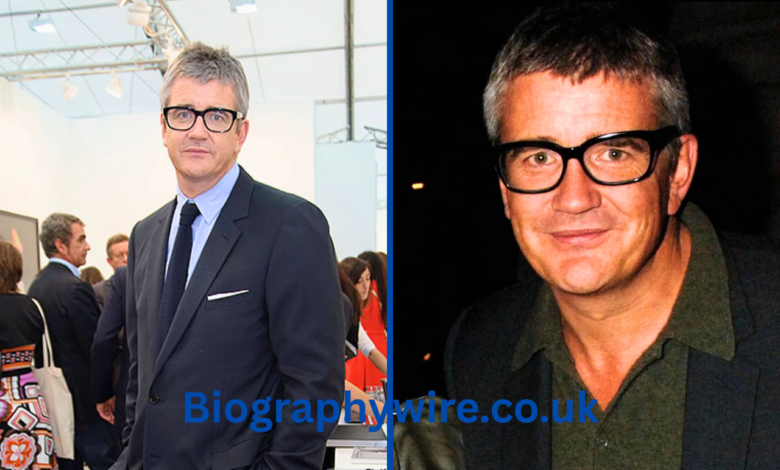
In the high-stakes, glittering world of contemporary art, few names carry as much weight or command as much respect as Jay Jopling. He isn’t just a gallerist; he is an architect of cultural moments, a visionary who saw the potential in a generation of provocative British artists long before the rest of the world caught on. If you’ve ever wondered who was behind the sensational rise of the Young British Artists (YBAs) or how London became the vibrant, global art hub it is today, the story inevitably leads back to one man: the founder of the iconic White Cube gallery. This is the story of how a Yorkshire-born Etonian with a passion for art, a flair for the dram
atic, and an unshakeable belief in his artists, rose to become one of the most influential figures in the contemporary art world, building a legacy that continues to shape the industry today.
Quick Facts About Jay Jopling
| Full Name | Jeremy Michael “Jay” Jopling |
|---|---|
| Age | Born June 1963 (Age 61) |
| Profession | Art Dealer, Gallerist, Entrepreneur |
| Born In | Thirsk, North Riding of Yorkshire, England |
| Parents | Father: Michael Jopling, Baron Jopling (Conservative Politician) Mother: Gail Jopling |
| Siblings | Nicholas Jopling (Older Brother) |
| Net Worth | Estimated to be around $50 Million |
| Social Media | While Jay Jopling himself is known for maintaining a low public profile, you can follow his gallery, White Cube, on Instagram (@whitecube) and other platforms to stay updated on his exhibitions and artists. |
The Forging of a Gallerist: From Fire Extinguishers to Fine Art
Jeremy Michael Jopling, known universally as Jay, was born into a world of privilege and politics. His father, Michael Jopling, was a prominent Conservative politician and Minister for Agriculture under Margaret Thatcher . Growing up on a farm in Yorkshire, however, Jopling’s early life was grounded in the realities of the English countryside . Despite this traditional upbringing, his path was set towards the avant-garde, thanks in large part to his mother, Gail, who nurtured his early appreciation for art .
He was sent to the prestigious Eton College, where his entrepreneurial spirit and art-world ambition first began to surface. In an early sign of his future career, the young Jopling persuaded the celebrated op-art painter Bridget Riley to illustrate the cover of the school magazine . This was followed by a degree in English Literature and History of Art at the University of Edinburgh . But his first job out of university was far from the polished galleries of Mayfair: he sold fire extinguishers door-to-door. In a move that would become characteristic of his bold, self-assured style, Jopling would pour fuel on his sleeve, set it alight, and then use the extinguisher to put out the flames as a dramatic demonstration .
While still a student in the mid-1980s, Jopling’s ambition took him to Manhattan, where he forged connections with some of the biggest names of the post-war American art scene, including Julian Schnabel, Keith Haring, and Jean-Michel Basquiat . He successfully persuaded them to donate works for “New Art: New World,” a charity auction he organized for Save the Children . This ability to build bridges between old money, new talent, and global icons would define his career. By the late 1980s, he had moved to London and was forming the friendships that would become the bedrock of his empire, most significantly with an ambitious young artist named Damien Hirst .
The Birth of the White Cube: A Revolution in a White Box
The year 1993 was a pivotal one for the art world. In May, Jay Jopling opened the original White Cube gallery on the first floor of 44 Duke Street, St James’s, in the heart of London’s traditional art district . The concept was radical in its simplicity: a stark, 20×20 foot white room designed to be a blank canvas, allowing the art to be the absolute focus . The exhibition policy was to showcase artists in a one-off setting, creating a sense of urgency and a pure, uninterrupted dialogue between the viewer and the art.
White Cube quickly became more than a gallery; it became the epicentre of a cultural phenomenon. Jopling assembled a roster of artists who would come to define the YBA generation, including Damien Hirst, Tracey Emin, Gary Hume, Marc Quinn, and the Chapman Brothers . He also represented more established artists like the legendary Lucian Freud, Antony Gormley, and Gilbert & George . As the artist Richard Wentworth noted, the 1970s might have earned you a short review in a niche art magazine, but Jay Jopling’s genius was in moving artists “from the arts pages to the news pages” . He understood the power of spectacle and narrative, making contemporary art accessible, exciting, and newsworthy.
Global Expansion and an Enduring Legacy
The success of the original White Cube allowed Jopling to expand. In 2000, he opened a significantly larger space, White Cube Hoxton Square, in the heart of London’s then-burgeoning East End art scene . This was followed by White Cube Mason’s Yard in St. James’s in 2006 . By 2012, the White Cube empire had gone truly global with the opening of a vast space in Bermondsey, the largest of the London sites, and a new outpost in Hong Kong, with a branch in São Paulo opening that same year .
While the São Paulo location closed in 2015, the international expansion demonstrated Jopling’s vision for White Cube as a global brand . He continued to be recognized for his influence, earning a place in GQ’s list of the 50 best-dressed British men in 2015 and consistently ranking high in art world power lists . As of 2025, ArtReview still ranked him at number 91 on its list of the most influential people in the contemporary art world, proving his enduring relevance . His focus has shifted towards Asia, a key market for the gallery . White Cube now represents a diverse range of artists from around the globe, including figures like the Chinese artist Shao Fan and the Japanese painter Yoko Matsumoto .
The Man Behind the Gallery: Personal Life and Private Passions
Despite his public prominence, Jay Jopling has always maintained an air of “friendly, but somehow inscrutable” mystery . His personal life has often been a subject of public interest. In 1997, he married the artist Sam Taylor-Wood, who later became the acclaimed director Sam Taylor-Johnson. They had two daughters, Angelica (born 1997) and Jessie Phoenix (born 2005), before separating amicably in 2008 . Their marriage was a high-profile union in the London social scene, blending art, celebrity, and culture.
He has since married Hikari Yokoyama, who has worked in the art world, and they welcomed a daughter, Djuna Mei Jopling, in 2019 . His eldest daughter, Angelica, is following in her father’s footsteps and has founded her own gallery in London called Incubator .
What is Jay Jopling’s Net Worth?
Jay Jopling’s financial success is a direct reflection of his impact on the art market. While exact figures fluctuate, estimates place his net worth at around **$50 million** . This wealth is primarily derived from his ownership and management of White Cube galleries, which represent a significant and valuable portfolio of artwork. He has also made investments in other art ventures, such as the online auction platform Paddle8 . While some older sources have suggested a much higher net worth, more recent and reliable sources align with the $50 million figure, cementing his status as one of the most successful and financially astute gallerists in the world .
The Future and His Digital Presence
Jay Jopling is famously media-shy, preferring to let his work and his artists speak for themselves. He does not maintain a public presence on Instagram, Twitter, or LinkedIn. However, his gallery, White Cube, maintains a robust social media presence across all major platforms, actively promoting its artists, sharing exhibition previews, and offering a glimpse into its global operations. This is the primary way Jopling interacts with the public online.
His recent focus has been on continuing the legacy of White Cube by fostering both established and emerging international talent, with a keen eye on the evolving markets in Asia . He is also involved in a long-term programming initiative in Brazil, showcasing his commitment to the Latin American art scene .
Conclusion: A Legacy of Vision and Nerve
Jay Jopling’s story is one of bold vision, unwavering nerve, and an extraordinary ability to spot talent before it becomes legendary. He didn’t just open a gallery; he created a cultural hub that redefined the British art scene and helped propel London to the centre of the global art world. From his beginnings selling fire extinguishers in Yorkshire to presiding over a multi-million-pound international art empire, his journey is a testament to the power of conviction and the importance of building genuine relationships.
As Jay Jopling continues to pave the way for future generations, his story stands as a reminder of how resilience, passion, and a keen eye can shape a meaningful and lasting legacy. He proved that art could be both intellectually rigorous and culturally mainstream, a formula that continues to define the contemporary art world today.
Read this to: Wendy Etris: The Quiet Strength Behind Wrestling’s “Phenomenal One”
Frequently Asked Questions (FAQs)
Q: Who is Jay Jopling?
A: Jay Jopling is a prominent English art dealer and gallerist. He is best known as the founder of the White Cube gallery network, one of the world’s most influential contemporary art galleries.
Q: What is the White Cube?
A: White Cube is a global art gallery founded by Jay Jopling in London in 1993. The gallery is renowned for representing some of the most important and influential contemporary artists, including Damien Hirst, Tracey Emin, Antony Gormley, and many others. It now has locations in London, Hong Kong, New York, Paris, and Seoul.
Q: What is Jay Jopling’s relationship to the YBAs?
A: Jay Jopling is widely credited as a key figure in the rise of the Young British Artists (YBAs). He began representing artists like Damien Hirst and Tracey Emin in the late 1980s and early 1990s, and through his White Cube gallery, he gave them a platform that helped launch them to international fame.
Q: Who was Jay Jopling married to?
A: Jay Jopling was married to the artist and filmmaker Sam Taylor-Johnson (formerly Sam Taylor-Wood) from 1997 to 2008. They have two daughters together. He is now married to Hikari Yokoyama.
Q: What is Jay Jopling’s net worth?
A: As of the most recent estimates, Jay Jopling’s net worth is approximately $50 million. This wealth has been accumulated through his successful career as a gallerist and his ownership of the White Cube gallery network .
Q: What is Jay Jopling’s background?
A: Jay Jopling was born in Yorkshire, England, in June 1963. He is the son of Michael Jopling, Baron Jopling, a former Conservative politician. He was educated at Eton College and the University of Edinburgh, where he studied English Literature and History of Art.