David Taylor and Paul McCartney: A Tale of Two Musical Titans

Introduction
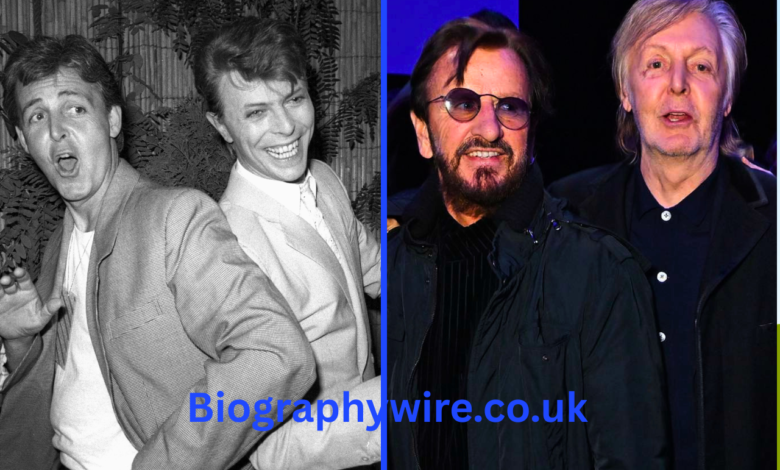
What happens when you bring together two musicians who have shaped the sound of modern music from completely different angles? You get a story of passion, perseverance, and pure talent that spans decades and genres. On one side, you have David Taylor, the virtuoso bass trombonist whose instrument has graced everything from jazz clubs to symphony halls alongside legends like Miles Davis and Frank Sinatra. On the other, you have Sir Paul McCartney, the Beatles icon who became the first musician in UK history to achieve billionaire status and whose melodies have provided the soundtrack to millions of lives across the globe.
While their paths may not have crossed directly in the studio, both men share something profound: an unwavering dedication to their craft, a willingness to push boundaries, and a legacy that continues to inspire musicians and music lovers alike. This is the story of two artists who prove that greatness comes in many forms—whether through the deep, resonant tones of a bass trombone or the timeless chords of a Hofner bass guitar.
Quick Facts
David Taylor (Bass Trombonist)
| Category | Details |
|---|---|
| Full Name | David Michael Taylor |
| Born | June 6, 1944 |
| Age | 82 (as of 2026) |
| Birthplace | New York City, New York, USA |
| Profession | Bass Trombonist, Session Musician, Educator |
| Education | Juilliard School (B.S. and M.S. degrees) |
| Genres | Jazz, Classical, Studio Session Work |
| Notable Collaborations | Miles Davis, Frank Sinatra, Barbra Streisand, Duke Ellington, The Rolling Stones, Aretha Franklin |
| Awards | NARAS Most Valuable Player Award (5 consecutive years), NARAS Virtuoso Award |
| Net Worth (Est.) | Information not publicly disclosed |
| Social Media | Website: davetaylor.net |
Sir Paul McCartney
| Category | Details |
|---|---|
| Full Name | James Paul McCartney |
| Born | June 18, 1942 |
| Age | 84 (as of 2026) |
| Birthplace | Walton Hospital, Liverpool, England |
| Profession | Singer-Songwriter, Composer, Bassist, Multi-Instrumentalist, Painter |
| Parents | James McCartney (father), Mary McCartney (mother, midwife) |
| Siblings | Michael McCartney (brother) |
| Spouse | Nancy Shevell (m. 2011), Linda McCartney (m. 1969–1998), Heather Mills (m. 2002–2008) |
| Children | Heather, Mary, Stella, James, Beatrice |
| Notable Groups | The Beatles, Wings |
| Net Worth (2026) | £1.055 billion (combined with Lady Nancy McCartney) |
| Social Media | Instagram: @paulmccartney |
Early Life and Musical Awakening
David Taylor: A New York Prodigy
David Michael Taylor was born on June 6, 1944, in the bustling heart of New York City. Growing up in a city that never slept, young David was surrounded by the vibrant energy of post-war America—a time when jazz was evolving, classical music was thriving, and new sounds were emerging from every corner. Music found him early, and he quickly developed a fascination with brass instruments. He learned to play the trumpet, tuba, and trombone during his formative years, showing an aptitude that would set him on a path to greatness.
His journey took a decisive turn when he enrolled at the prestigious Juilliard School in New York. There, under the tutelage of Davis Shuman, Taylor discovered the bass trombone—an instrument that would become his voice, his identity, and his lifelong companion. He earned both his Bachelor of Science and Master of Science degrees from Juilliard, graduating in 1968 with a mastery of his craft that few could match.
Paul McCartney: A Liverpool Boy with a Guitar
Meanwhile, across the Atlantic, James Paul McCartney entered the world on June 18, 1942, at Walton Hospital in Liverpool. He was born into a working-class family—his father, James, worked at the Liverpool Cotton Exchange, while his mother, Mary, was a midwife who spent countless hours on her bicycle delivering babies across the city. Music was always present in the McCartney household; his father was a jazz pianist who encouraged his sons to pursue their musical interests.
Young Paul taught himself to play the Spanish guitar, trumpet, and piano at an early age. By the time he was just sixteen, he had already written “When I’m Sixty-Four”—a song that would later become a Beatles classic. But the defining moment of his early life came in 1957 when he met John Lennon at a church fete in Liverpool. Lennon invited him to join The Quarrymen, the skiffle group he had formed with some schoolmates. That chance meeting would change the course of music history forever.
Tragedy struck the McCartney family in October 1956 when Paul’s mother Mary died of breast cancer. The loss had a profound impact on the young musician, later inspiring one of the Beatles’ most beloved songs, “Let It Be”. It was a pain that would echo through his music for decades, adding depth and emotion to his songwriting.
The Path to Greatness
David Taylor: The Session King
David Taylor’s professional career took off in 1967 when he joined Leopold Stokowski’s American Symphony Orchestra as a trombonist. Almost simultaneously, he began appearing with the New York Philharmonic under the legendary conductor Pierre Boulez. But Taylor wasn’t content to confine himself to the classical world. His versatility soon caught the attention of jazz greats, and he became a member of the Thad Jones/Mel Lewis Jazz Band—an ensemble that was redefining the boundaries of big band jazz.
The 1970s saw Taylor’s career explode as he worked with some of the biggest names in jazz: Chuck Israels, George Russell, Larry Elgart, and later in the 1980s, George Gruntz, Bob Mintzer, Ray Anderson, Jim Pugh, and the legendary Gil Evans. He even recorded with Duke Ellington on his album New Orleans Suite—a testament to his extraordinary range as a musician.
What truly set Taylor apart, however, was his work as a session musician. His distinctive bass trombone sound became a sought-after addition to countless recordings. He appeared and recorded with an astonishing array of artists: Barbra Streisand, Miles Davis, Quincy Jones, Frank Sinatra, Aretha Franklin, The Rolling Stones, and Blood, Sweat & Tears. His ability to adapt to any genre—from jazz to pop, classical to rock—made him one of the most versatile session musicians of his generation.
Taylor’s excellence did not go unnoticed. He won the National Academy of Recording Arts and Sciences Most Valuable Player Award for five consecutive years—the maximum number of times it could be awarded. He was also honored with the NARAS Most Valuable Player Virtuoso Award, an accolade given to no other bass trombonist. In 1998 alone, he performed on four Grammy-nominated recordings, with two of them—the Joe Henderson Big Band and the Randy Brecker Band—winning Grammys.
Paul McCartney: From Beatlemania to Solo Stardom
Paul McCartney’s rise to fame is the stuff of legend. By 1960, The Quarrymen had evolved into The Beatles, with McCartney on bass, John Lennon on rhythm guitar, George Harrison on lead guitar, and Ringo Starr on drums. What followed was nothing short of a cultural revolution. The Beatles became one of the most influential bands in music history, releasing twelve studio albums before disbanding in 1970.
During his time with The Beatles, McCartney wrote or co-wrote some of the most iconic songs ever recorded: “Yesterday,” “Hey Jude,” “Let It Be,” “Penny Lane,” and countless others. His melodic genius and innovative bass playing helped lift popular music from its origins in entertainment to a creative, highly commercial art form.
When The Beatles broke up, McCartney didn’t skip a beat. He launched his solo career in 1970 with the self-titled album McCartney and went on to form the band Wings, which produced hits like “Band on the Run” and “Live and Let Die”. Over the decades, McCartney has continued recording and touring, releasing nineteen solo studio albums.
In 1997, McCartney was knighted for his services to music. In 1999, he was inducted into the Rock and Roll Hall of Fame as a solo artist, having already been inducted as a member of The Beatles. His influence on music is immeasurable—he is widely regarded as one of the most successful songwriters and composers in history.
Major Achievements and Lasting Impact
David Taylor: Elevating the Bass Trombone
David Taylor’s contributions to music go far beyond his session work. He has been a tireless advocate for the bass trombone as a solo instrument, commissioning dozens of new works for the instrument in solo and chamber idioms. He has collaborated with composers including Alan Hovhaness, Charles Wuorinen, George Perle, Frederic Rzewski, Lucia Dlugoszchewski, Eric Ewazen, David Liebman, and Daniel Schnyder. These commissions have expanded the bass trombone repertoire significantly, ensuring that future generations of trombonists will have challenging and beautiful music to perform.
Taylor has recorded four solo albums on the Koch, New World, and DMP labels and has presented recitals at prestigious venues worldwide, including Carnegie Recital Hall, Kaufman Auditorium at the 92nd Street Y, and Merkin Hall. He has appeared as a soloist with the St. Lukes Chamber Orchestra, The Chamber Music Society of Lincoln Center, the Caramoor Festival Orchestra, the New York Chamber Symphony, the Adelaide Philharmonic, and many others.
His chamber music collaborations are equally impressive. He has appeared and recorded with Yo-Yo Ma, Itzhak Perlman, and Wynton Marsalis. He currently performs with The Chamber Music Society of Lincoln Center, The Charles Mingus Big Band, Eos Orchestra, The Mostly Mozart Festival Orchestra, and the Michelle Camillo Band, among others.
Beyond performing, Taylor is a dedicated educator. He has been on the faculties of the Manhattan School of Music since 1989, the Mannes School of Music since 1991, and also teaches at NYU. Through his teaching, he has influenced countless young musicians, passing on the knowledge and techniques he has developed over a lifetime of playing.
Paul McCartney: A Legacy That Transcends Music
Paul McCartney’s achievements are so vast that they almost defy summary. As a member of The Beatles, he helped create the most influential body of work in popular music history. The Beatles remain one of the best-selling musical acts of all time, alongside Elvis Presley and Michael Jackson.
His solo career and work with Wings have produced numerous hits and critically acclaimed albums. In 2026, at the age of 84, McCartney released his twentieth solo studio album, The Boys of Dungeon Lane, which was inspired by his experiences growing up in post-war Liverpool. It is his first album in over five years and demonstrates that his creative spark remains undimmed.
McCartney’s songwriting catalogue is among the most valuable in music history. His publishing company, MPL Communications, owns the rights to thousands of songs, including many Broadway and Hollywood standards. In 2026, he and his wife, Lady Nancy McCartney, were listed with a combined fortune of £1.055 billion on the Sunday Times Rich List, making him the only musician in UK history to reach billionaire status.
His influence extends beyond music into art—he is also an accomplished painter—and philanthropy. He has been a passionate advocate for animal rights and vegetarianism, following in the footsteps of his late wife, Linda.
Personal Life: The Human Behind the Music
David Taylor: Family Man and Mentor
Behind the accolades and the recording sessions, David Taylor is a devoted family man. He is married and has children, and his personal life reflects the same dedication and warmth that he brings to his music. While he has spent decades performing with the world’s greatest musicians, those who know him describe a humble, generous individual who is always willing to share his knowledge with younger players.
His work as an educator is a testament to his character. He doesn’t just teach technique; he inspires a love for music and a commitment to excellence. His students have gone on to successful careers of their own, carrying forward the legacy he has built.
Paul McCartney: Love, Loss, and New Beginnings
Paul McCartney’s personal life has been as eventful as his professional one. He married photographer Linda Eastman in March 1969. Linda, a single mother to daughter Heather, was fiercely loyal and helped ground Paul during the turbulent period when The Beatles were nearing their end. Together, they had three children: Mary, Stella, and James, and Paul adopted Linda’s daughter Heather. The couple remained together until Linda’s death from breast cancer in April 1998 at the age of 56.
In 2002, McCartney married Heather Mills, a former model and activist. The marriage was tumultuous and ended in divorce in 2008, with a settlement of approximately $50 million. They had one daughter together, Beatrice.
Since 2011, McCartney has been married to Nancy Shevell, an American businesswoman. The couple has been described as a steady and loving partnership, and Nancy has been a supportive presence in McCartney’s later years.
McCartney’s children have all pursued creative careers. Mary is a photographer, Stella is a renowned fashion designer, James is a musician, Heather is a potter and businesswoman, and Beatrice has pursued various interests. McCartney has often spoken about the joy his children and grandchildren bring him, and family remains at the center of his life.
Net Worth and Income Sources
David Taylor: A Career Built on Excellence
David Taylor’s net worth is not publicly disclosed, but his decades of work as a premier session musician, solo artist, and educator have undoubtedly provided him with a comfortable living. His income streams include recording sessions, solo performances, commissions, and his teaching positions at prestigious institutions like the Manhattan School of Music, Mannes College, and NYU. He also has an endorsement deal with Edwards Instruments, playing exclusively on Edwards bass trombones and Griego/Taylor mouthpieces.
While Taylor may not have the massive wealth of a pop superstar, his influence and respect within the music community are immeasurable. He has built a career on excellence, not celebrity—a testament to the power of mastery and dedication.
Paul McCartney: Britain’s First Musician Billionaire
Paul McCartney’s financial success is as legendary as his music. In 2026, Sir Paul and Lady Nancy McCartney were listed with a combined fortune of £1.055 billion on the Sunday Times Rich List. This makes him the only musician in UK history to reach billionaire status.
His wealth comes from multiple sources: decades of touring, songwriting royalties, publishing rights through his company MPL Communications, and the enduring global success of The Beatles catalogue. The release of “Now and Then,” the last official Beatles single in 2024, revived interest in the band and provided a significant boost to McCartney’s earnings. Estimates of his net worth in US dollars range between $1.2 billion and $1.9 billion.
McCartney’s business acumen has been as sharp as his musical instincts. He has carefully managed his publishing rights and investments, ensuring that his legacy—and his family’s financial future—is secure for generations to come.
Social Media and Public Engagement
David Taylor: A Quiet Presence
David Taylor maintains a relatively low profile on social media. His website, davetaylor.net, serves as a hub for information about his career, upcoming performances, and teaching activities. Unlike many contemporary musicians, Taylor has let his music speak for itself, focusing on his craft rather than cultivating an online persona. For fans and aspiring musicians, his website is a valuable resource for learning about his work and his contributions to the bass trombone repertoire.
Paul McCartney: Connecting with a Global Audience
Paul McCartney, by contrast, has embraced social media as a way to connect with his millions of fans around the world. His Instagram account, @paulmccartney, is a vibrant mix of personal moments, behind-the-scenes glimpses, and announcements about new music. He uses the platform to share his thoughts on everything from music to family to his beloved vegetarian lifestyle.
McCartney’s social media presence reflects his personality—warm, approachable, and always eager to engage with his audience. He has used it to pay tribute to fellow musicians, including the late Taylor Hawkins of Foo Fighters, with whom he shared a special musical relationship. His posts often go viral, demonstrating that even at 84, he remains one of the most beloved and followed musicians in the world.
Recent Updates and Future Plans
David Taylor: Still Performing, Still Teaching
As of 2026, David Taylor continues to perform and teach at an age when many musicians have long since retired. His upcoming events include appearances with the Santa Fe Chamber Music Festival and Chamber Music Northwest, as well as master classes and recitals in the United States, Europe, and Japan. He remains a member of numerous ensembles, including The Chamber Music Society of Lincoln Center, The Charles Mingus Big Band, and The Mostly Mozart Festival Orchestra.
Taylor’s commitment to commissioning new works for the bass trombone continues, ensuring that the instrument’s repertoire grows and evolves. His influence on the next generation of trombonists is secure, and his legacy as one of the greatest bass trombonists in history is undisputed.
Paul McCartney: A Creative Force at 84
Paul McCartney shows no signs of slowing down. In 2026, he released The Boys of Dungeon Lane, his twentieth solo studio album, to critical acclaim. The album is a deeply personal collection of songs inspired by his childhood in post-war Liverpool, and it has been praised for its warmth, honesty, and melodic brilliance. He embarked on a full press tour to promote the record, demonstrating that his passion for music and connecting with fans remains as strong as ever.
McCartney has also been reflecting on his extraordinary life in interviews and documentaries. In a 2026 BBC Radio 2 special, he chose ten songs that have soundtracked his remarkable life, sharing stories about The Beatles’ relationship with The Rolling Stones and The Kinks, as well as recollections of meetings with Elvis Presley, Brian Wilson, and Bob Dylan.
Looking ahead, McCartney has hinted that he has no intention of retiring. He continues to write, record, and perform, driven by the same creative impulse that has fueled him for over seven decades.
Conclusion: Two Lives, One Passion
David Taylor and Paul McCartney may come from different worlds—one from the jazz clubs and symphony halls of New York, the other from the working-class streets of Liverpool. Yet their stories share a common thread: an unwavering dedication to music, a willingness to push boundaries, and a legacy that will inspire generations to come.
David Taylor’s journey from a young boy in New York City to one of the most respected bass trombonists in history is a testament to the power of mastery and perseverance. His work with legends like Miles Davis, Frank Sinatra, and Duke Ellington, his solo recordings, and his teaching have left an indelible mark on the world of music.
Paul McCartney’s story is nothing short of extraordinary. From the humble beginnings of a Liverpool boy with a guitar to becoming the first musician in UK history to achieve billionaire status, he has proven that talent, hard work, and an unshakeable belief in the power of melody can change the world. His songs have provided the soundtrack to millions of lives, and his influence on popular music is immeasurable.
As David Taylor continues to perform and teach, and as Paul McCartney continues to write and record, their stories remind us that greatness is not defined by fame or fortune alone. It is defined by passion, by perseverance, and by the courage to follow one’s creative vision wherever it may lead. Both men have built legacies that will endure long after they have played their final notes—and in doing so, they have inspired countless others to pick up an instrument, write a song, and dream big.
Read this to: Christian Stracke: The High-Flying Financier Behind the RHOBH Headlines
Frequently Asked Questions
About David Taylor
1. Who is David Taylor?
David Taylor is an American bass trombonist, session musician, and educator. Born in New York City in 1944, he graduated from Juilliard and has performed with some of the biggest names in music, including Miles Davis, Frank Sinatra, Barbra Streisand, and The Rolling Stones.
2. What instrument does David Taylor play?
David Taylor is a bass trombonist. He learned to play trumpet, tuba, and trombone in his youth but made the bass trombone his primary instrument while attending Juilliard. He plays Edwards bass trombones exclusively.
3. Has David Taylor won any awards?
Yes. Taylor won the NARAS Most Valuable Player Award for five consecutive years and received the NARAS Most Valuable Player Virtuoso Award—an honor given to no other bass trombonist.
4. Where does David Taylor teach?
David Taylor is on the faculties of the Manhattan School of Music, Mannes College, and NYU.
5. Has David Taylor recorded with Paul McCartney?
No, David Taylor and Paul McCartney have not collaborated directly. However, Taylor has recorded with many other legendary artists, including The Rolling Stones, Blood, Sweat & Tears, and Aretha Franklin.
About Paul McCartney
6. How old is Paul McCartney?
Paul McCartney was born on June 18, 1942, making him 84 years old as of 2026.
7. What is Paul McCartney’s net worth?
As of 2026, Paul McCartney and his wife, Lady Nancy McCartney, are worth £1.055 billion, making him the only musician in UK history to reach billionaire status.
8. Is Paul McCartney still making music?
Yes. In 2026, McCartney released his twentieth solo studio album, The Boys of Dungeon Lane, and continues to write, record, and tour.
9. How many children does Paul McCartney have?
Paul McCartney has five children: Heather (adopted), Mary, Stella, James, and Beatrice.
10. Was Paul McCartney knighted?
Yes, Paul McCartney was knighted for his services to music in 1997.