Introduction
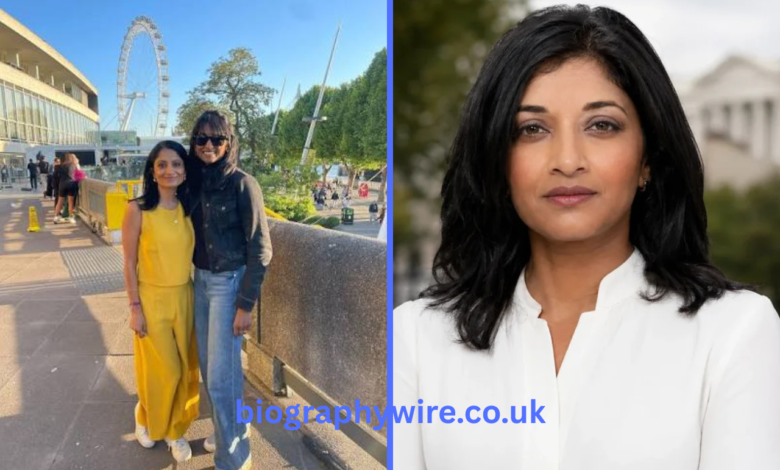
If you follow international news, you have probably come across a calm, sharp, and deeply informed presenter guiding you through some of the world’s most complicated stories. That face belongs to Sumi Somaskanda. She is one of the most compelling voices in global journalism today, and yet, despite her wide reach, many viewers still want to know more about who she actually is.
Sumi Somaskanda is currently the Chief Presenter at BBC News, based in Washington, D.C. She brings over 14 years of experience in European broadcasting, a multicultural background, and a fluency in four languages to her role. What sets her apart is not just her on-screen composure but her ability to make complex global events feel accessible and relevant to everyday audiences.
In this article, you will get a full picture of Sumi Somaskanda — her early life, her impressive educational background, her long career at Deutsche Welle, her transition to the BBC, her reporting highlights, her role beyond broadcasting, and what makes her such a standout figure in modern media.
Who Is Sumi Somaskanda?
At its core, the story of Sumi Somaskanda is about a woman who built something rare in journalism — a genuinely global career. She is an American journalist, news anchor, writer, and editor. She was born and raised in Rochester, New York, a city known for its cultural diversity. That multicultural upbringing, combined with Tamil Sri Lankan heritage, gave her a cross-cultural lens that she has carried into every story she has ever told.
She is not just a face on a screen. She is a writer whose work has appeared in major publications. She is a moderator who has chaired panels at international summits. She is a fellow and networked leader within prestigious global organizations. And she is a broadcaster who has spent the better part of two decades making sense of the world for millions of viewers.
Her calm delivery is not accidental. It reflects years of discipline, deep reporting, and a genuine commitment to presenting facts with context. When you watch Sumi Somaskanda on BBC News, you are watching someone who has put in the work.
Early Life and Background
Sumi Somaskanda grew up in Rochester, New York. Her roots are Tamil Sri Lankan, and that heritage has been a quiet but meaningful thread throughout her professional identity. Growing up in the United States with South Asian roots gave her a dual perspective — she understood American culture from the inside while also carrying the sensibility of a community that knows what it means to navigate the world as an outsider.
She speaks four languages: English (natively), German, Spanish, and conversational Tamil. That linguistic range is not a coincidence. It reflects a life spent crossing borders, both literally and culturally. For a journalist who covers international affairs, those language skills are not just a resume item — they open doors, build trust with sources, and add depth to reporting.
Her interest in global affairs took root early. By the time she was ready for university, she knew exactly what she wanted to do.
Education: Northwestern University’s Medill School of Journalism
Sumi Somaskanda completed both her Bachelor of Science in Journalism and her Master of Science in Journalism at Northwestern University’s Medill School of Journalism. Medill is widely regarded as one of the top journalism programs in the world. It produces journalists who are trained to be rigorous, ethical, and adaptable — qualities that Somaskanda has demonstrated consistently across her career.
Her time at Northwestern was not just about learning to write or broadcast. It was about building the analytical foundation that would later help her cover everything from EU elections to the Russian invasion of Ukraine with authority and precision.
Graduating with dual degrees from Medill placed her in an elite group of journalists. It also gave her a strong professional network and a credibility that opened doors in competitive newsrooms.
Career at Deutsche Welle: 14 Years in Berlin
Before most people outside Europe knew her name, Sumi Somaskanda was already one of the most recognized faces on DW News, Germany’s international broadcaster. She spent approximately 14 years in Berlin working as a senior presenter and correspondent.
Those 14 years were formative in every sense of the word. Berlin is not just a European capital. It is a city at the intersection of history, politics, and global change. Reporting from there meant covering stories that mattered to the entire world — refugee crises, the rise of far-right movements, Brexit negotiations, NATO dynamics, and the evolving identity of a post-Cold War Europe.
What She Covered at DW
Her beat at Deutsche Welle was broad and demanding. Some of the major stories she covered include:
- The 2014 Ukraine crisis and Russia’s annexation of Crimea
- The 2016 U.S. presidential election and its implications for Europe
- The European Union elections and shifting political landscapes across the continent
- Brexit and the long, complicated negotiations between the UK and the EU
- The COVID-19 pandemic and its impact on European societies and economies
- The 2020 U.S. presidential election
- The Russian invasion of Ukraine in 2022
Each of these stories required not just a knowledge of current events but a deep understanding of history, geopolitics, and the human dimension of conflict. Sumi Somaskanda brought all three to her coverage consistently.
Beyond Anchoring at DW
At Deutsche Welle, she did more than anchor. She reported on Germany for a range of international publications, including The Atlantic, Foreign Policy, the Washington Post, Al Jazeera, Global Post, Newsweek, PRI, and USA Today. She also served as an editor at the Berlin Policy Journal, Germany’s leading English-language foreign affairs magazine. And she hosted Studio Berlin, a Berlin-based current affairs podcast.
That combination of anchoring, print journalism, editing, and podcasting made her one of the most well-rounded journalists working in Europe at the time.
Joining BBC News: A Major Career Milestone
In May 2023, Sumi Somaskanda made a significant move. She joined BBC News as Chief Presenter, based in Washington, D.C. This transition marked a new chapter — from European broadcasting to one of the world’s most recognized and trusted news organizations, positioned right at the heart of American political life.
The BBC appointment was widely noted within journalism circles. Washington, D.C. is the center of U.S. political power, and BBC News America is watched by audiences across the globe. Taking on the role of Chief Presenter there meant stepping into one of the most high-profile journalism positions in the English-speaking world.
What She Does at the BBC
As Chief Presenter, Sumi Somaskanda anchors news programs, conducts in-depth interviews, and leads live coverage of major breaking events. Her reporting includes U.S. politics, international diplomacy, NATO developments, and global humanitarian issues. She covers presidential transitions, summits, elections, and the kind of stories that shape the course of nations.
Her role is not passive. She does not simply read from a prompter. She asks tough questions, contextualizes complex events, and brings a global perspective that few American-based journalists can match — precisely because she has lived and worked on multiple continents.
Reporting Style: What Makes Her Stand Out
If you watch Sumi Somaskanda for even a few minutes, you notice something. She does not sensationalize. She does not perform outrage. She stays composed, asks clear questions, and lets the story do the work.
That style is a reflection of her training and her temperament. She has reported from volatile situations, covered emotionally charged stories, and interviewed world leaders — all while maintaining the kind of measured approach that audiences trust. In a media landscape that increasingly rewards heat over light, her commitment to clarity and balance stands out.
Her multicultural background also shapes how she covers stories. She understands, at a personal level, that most global events involve multiple perspectives. She does not flatten complexity. She honors it.
Beyond Broadcasting: Speaker, Moderator, and Global Leader
Sumi Somaskanda’s influence extends well beyond the television screen. She has established herself as a respected voice in wider conversations about journalism, democracy, and global governance.
Notable Events and Platforms
She has appeared as a panelist and moderator at some of the world’s most prestigious events, including:
- The Nobel Prize Summit, where she participated in discussions about democracy and media freedom. The Nobel Prize’s official website lists her as a panelist — a recognition that speaks to her credibility beyond journalism.
- The Q Berlin Conference, focusing on inequality and social change.
- Robert Bosch Foundation Fellowship events — she is an alumna of this highly competitive program.
- BMW Foundation Responsible Leaders Network — she is an active member of this global community of leaders committed to peaceful and just societies.
- CIEE Global Institute Berlin, where she has lectured American university students about international journalism.
These affiliations tell you something important about how Sumi Somaskanda sees her role. She is not just a reporter who shows up for the camera. She is someone invested in the broader ecosystem of a free press, informed citizens, and accountable governance.
I find that combination genuinely rare in broadcast journalism. Many great reporters are siloed in their medium. Somaskanda moves fluidly between television, print, moderation, education, and leadership — and she does it with a consistency of values that is hard to fake.
Languages and Cultural Identity
One of the most distinctive aspects of Sumi Somaskanda’s identity is her multilingualism. She is fluent in English, German, and Spanish, and speaks conversational Tamil. For an international journalist, these are not just skills — they are tools of understanding.
Speaking German meant she could engage with sources, officials, and ordinary people in Germany on their own terms. That kind of direct linguistic access changes the quality of reporting. It is the difference between understanding a story through translation and understanding it from the inside.
Her Tamil heritage connects her to the Sri Lankan Tamil diaspora, a community with a deeply significant and often overlooked history. While she has not made that identity the center of her public persona, it informs her sensitivity to stories of displacement, cultural identity, and global migration — themes that run through much of her reporting.
Her social media presence reflects this balance well. On Twitter and Instagram, she shares coverage updates, BBC segments, and occasional reflections on global events — professional and authentic in equal measure.
Personal Life: What We Know
Sumi Somaskanda keeps her personal life private. She has not publicly discussed a husband or partner. There is no publicly confirmed information about her marital status or family situation beyond her upbringing in Rochester, New York.
That privacy is a deliberate choice. In an era when journalists are expected to perform their personal lives on social media, her decision to keep that boundary is both understandable and, frankly, refreshing. It allows audiences to focus on her journalism rather than her personal narrative.
Her exact date of birth has not been publicly disclosed. Based on her academic and professional timeline — completing dual degrees at Northwestern’s Medill School before her career in Berlin — she is estimated to be in her mid-to-late forties as of 2026.
Why Sumi Somaskanda Matters in Modern Journalism
There is a bigger reason to pay attention to someone like Sumi Somaskanda beyond her impressive resume. She represents something that modern journalism badly needs: a journalist who bridges worlds.
She is American-born with South Asian roots. She is deeply European in her professional formation. She is now anchoring major coverage in Washington, D.C. for a British broadcaster. That combination of identities and experiences is not just a personal story — it is a model for what international journalism can look like when it takes diversity seriously.
In a media environment struggling with trust, polarization, and the erosion of nuance, journalists who can hold multiple truths at once — who can report a story from Berlin with the same clarity and care as a story from Washington — are genuinely valuable. Sumi Somaskanda is one of those journalists.
Her trajectory from Rochester to Medill to Berlin to Washington is the kind of career arc that inspires people who want to tell global stories. It shows that depth, discipline, and a commitment to honest reporting still matter. And right now, that message could not be more important.
Conclusion
Sumi Somaskanda is one of the most accomplished international journalists working in broadcast media today. From her formative years in Rochester to her 14-year run at Deutsche Welle in Berlin, and now her role as Chief Presenter at BBC News in Washington, D.C., she has built a career defined by depth, global perspective, and a quiet but unmistakable commitment to quality journalism.
She is a writer, an editor, a broadcaster, a moderator, a fellow, and a multilingual voice for global stories. She covers the stories that matter — elections, wars, summits, crises — and she does it with the kind of composure and clarity that audiences have come to trust.
If you have been curious about Sumi Somaskanda, now you know why so many people are paying attention. And if you have not watched her work yet, consider this your invitation.
What do you think makes a great international journalist? Share your thoughts — and share this article with anyone who cares about quality journalism in today’s world.
Frequently Asked Questions About Sumi Somaskanda
1. Who is Sumi Somaskanda? Sumi Somaskanda is an American journalist, news anchor, writer, and editor currently serving as Chief Presenter at BBC News in Washington, D.C. She previously worked at Deutsche Welle (DW News) in Berlin for 14 years.
2. Where is Sumi Somaskanda from? She was born and raised in Rochester, New York. She has Tamil Sri Lankan heritage, giving her a multicultural background that has deeply informed her career.
3. What is Sumi Somaskanda’s role at the BBC? She is the Chief Presenter at BBC News, based in Washington, D.C. She joined BBC in May 2023. She anchors news programs and covers U.S. politics, international affairs, and major global events.
4. Where did Sumi Somaskanda go to school? She completed both her Bachelor of Science in Journalism and her Master of Science in Journalism at Northwestern University’s Medill School of Journalism, one of the world’s leading journalism programs.
5. What languages does Sumi Somaskanda speak? She speaks English (natively), German, and Spanish fluently, and has conversational proficiency in Tamil.
6. How long did Sumi Somaskanda work at Deutsche Welle? She worked at DW News in Berlin for approximately 14 years as a senior presenter and correspondent before transitioning to the BBC in 2023.
7. Is Sumi Somaskanda married? There is no publicly confirmed information about her marital status. She keeps her personal life private and has not shared details about a husband or partner.
8. What publications has Sumi Somaskanda written for? Her written work has appeared in The Atlantic, Foreign Policy, the Washington Post, Al Jazeera, Global Post, Newsweek, PRI, and USA Today. She also served as an editor at the Berlin Policy Journal.
9. Has Sumi Somaskanda won any awards? While no specific award wins are widely publicized, she has been recognized through prestigious fellowships including the Robert Bosch Foundation Fellowship. She has also been invited to participate in the Nobel Prize Summit as a panelist, which reflects her standing in global journalism.
10. What is Sumi Somaskanda’s Wikipedia page? As of 2026, there is no full standalone English Wikipedia biography for Sumi Somaskanda, though she does appear in Wikidata and on the official websites of BBC News, DW News, and the Nobel Prize Summit.