Introduction
You probably know the name Gary McAllister, but do you really know the full story? Most fans remember him for that stunning free kick against Everton or his calm penalty kicks. But there is so much more beneath the surface. This is a player who faced crushing disappointment, devastating personal tragedy, and constant skepticism about his age. Yet he rose again to become one of the most influential midfielders of his generation. In this article, we will walk through the entire journey of Gary McAllister. You will learn about his early days in Scotland, his leadership at Leeds United, his heartbreak with Scotland’s national team, and his miraculous late career revival at Liverpool. By the end, you will understand why Gary McAllister is not just a footnote in football history. He is a masterclass in resilience, intelligence, and timing. Let us dive into the story of a man who proved that football is not always about speed. Sometimes, it is about brainpower and guts.
The Scottish Beginnings: More Than Just Grit
Gary McAllister was born on December 25, 1964, in Motherwell, Scotland. Growing up in a football mad country,Gary McAllister: The Underrated Hero Who Shocked Football he learned the game on hard pitches and rainy afternoons. He started his professional career at Motherwell FC in 1981. At first, he was a raw teenager with more enthusiasm than polish. But you could see the intelligence from the start. He did not rely on explosive pace. Instead, he used his passing range and positional sense to control games. By 1985, he had made over 50 appearances for Motherwell. His performances caught the attention of bigger clubs. In 1985, Leicester City came calling. This move to England changed everything. The English game was faster and more physical. But Gary McAllister adapted quickly. He became a fans’ favorite at Filbert Street. His ability to spray passes from midfield and score from distance made him a constant threat. Over five years at Leicester, he matured into a complete midfielder. You could see the leadership qualities emerging. He was not loud or flashy. He led by example with every touch and every tackle. By 1990, he was ready for the next step.
Leeds United: The Captain Who Conquered England
In 1990, Gary McAllister made a move that would define his prime years. He joined Leeds United for £1 million. At the time, this was a significant fee for a Scottish midfielder. But manager Howard Wilkinson knew exactly what he was getting. A conductor for the orchestra. A player who could slow down a frantic game or speed it up with one pass. Leeds was a club rebuilding its identity. They had been out of the top flight for years. McAllister walked into the dressing room and immediately commanded respect. He did not shout. He spoke softly, but everyone listened. In his first season, Leeds finished fourth. The next season, 1991–92, was magical. Leeds United won the last ever Football League First Division title before the Premier League began. Gary McAllister was the heartbeat of that team. He played 42 league matches and scored 10 goals from midfield. His partnership with Gordon Strachan and Gary Speed was a thing of beauty. They complemented each other perfectly. Strachan provided the trickery. Speed brought the energy. McAllister delivered the precision and the composure. I remember watching that Leeds team as a kid. You could not take your eyes off McAllister. He never seemed rushed. Even when opponents pressed him hard, he found space. He found a pass. That season, he was named the PFA Player of the Year. It was the highest honor from his fellow professionals. That says everything about his standing in the game. But football has a cruel side. The next season, Leeds struggled to adapt to the new Premier League. McAllister remained consistent, but the team around him aged. By 1995, he needed a fresh challenge.
Scotland: The Agony of Almost
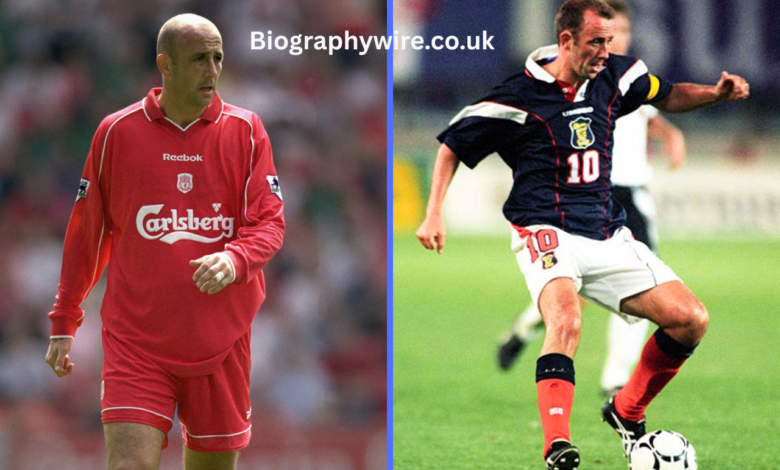
For any Scottish footballer of that era, representing your country was everything. Gary McAllister earned his first Scotland cap in 1990. Over the next decade, he won 57 caps and scored 5 goals. But his international story is tinged with what ifs. Scotland qualified for the 1998 World Cup in France. This was a huge deal for the nation. McAllister was named captain for the tournament. The opening match was against Brazil, the defending champions. Scotland played bravely and lost 2–1. But the real heartbreak came in the second group match against Norway. With the score 1–1 late in the game, Scotland won a penalty. Gary McAllister stepped up. This was his moment. He was the coolest man on the pitch, or so everyone thought. He struck the ball firmly, but Norwegian goalkeeper Frode Grodas guessed correctly and saved. The match ended 1–1. Scotland needed to beat Morocco in their final game, but they lost 3–0. Scotland crashed out of the group stage. McAllister was devastated. He took full responsibility publicly. But here is what you need to understand about the man. He did not hide. He did not make excuses. He faced the media and the angry fans. That takes incredible courage. The missed penalty haunted him for years. But it also forged something harder inside him. He learned that failure is not the end. It is a setup for a comeback.
Coventry City: The Veteran Who Kept Fighting
After Leeds, Gary McAllister joined Coventry City in 1996. He was now in his thirties. Many pundits thought his best days were behind him. They were wrong. At Coventry, he became a player manager in 1998. This is one of the toughest jobs in football. You have to lead your teammates while also making tough decisions about who plays and who sits. McAllister handled it with dignity. He kept Coventry in the Premier League against all odds. The team did not have big stars. They survived on organization, hard work, and McAllister’s creativity. In the 1999–2000 season, he scored 10 league goals from midfield. At age 35. Think about that for a second. Most midfielders are winding down at that age. He was playing 90 minutes every week and producing moments of magic. But Coventry decided to go in a different direction. They let McAllister go on a free transfer in the summer of 2000. He was 36 years old. Most clubs looked at his birth certificate and walked away. One club, however, saw something else. They saw a winner.
The Miracle at Liverpool: How a 36 Year Old Changed Everything
This is the part of the Gary McAllister story that still makes people shake their heads in disbelief. In July 2000, Liverpool manager Gérard Houllier signed McAllister on a free transfer. The reaction was not kind. Fans groaned. Pundits laughed. A 36 year old midfielder with slow legs? In a young, energetic Liverpool team? It made no sense on paper. But football is not played on paper. From his very first game, McAllister proved the doubters wrong. He did not try to run past people. He made the ball do the work. His passing was so sharp and accurate that teammates knew exactly where the ball would arrive. He brought calm to a chaotic midfield. Liverpool had young stars like Steven Gerrard, Michael Owen, and Emile Heskey. But they needed a brain on the pitch. McAllister was that brain. The 2000–01 season became legendary. Liverpool won a remarkable treble: the League Cup, the FA Cup, and the UEFA Cup. Gary McAllister was central to all three finals. Let me give you two moments that still give me chills.
First, the Merseyside derby in April 2001. Liverpool trailed Everton 2–1 with minutes left. Deep into injury time, Liverpool won a free kick 40 yards from goal. Too far for most players to score. McAllister stepped up. He curled a dipping, swerving shot that flew past Everton’s keeper. The goal stood. Liverpool won 3–2. Anfield erupted. You could not write a better script. The second moment came in the FA Cup final against Arsenal. Liverpool trailed 1–0 with 17 minutes left. McAllister had been relatively quiet. Then he won a penalty after a foul on him in the box. He picked himself up, placed the ball on the spot, and smashed it into the net. 1–1. Liverpool went on to win 2–1 thanks to Michael Owen’s late double. But without McAllister’s ice cold penalty, there is no comeback. In the UEFA Cup final against Alavés, he scored another penalty and ran the show from midfield. At 36. Let that sink in. At the end of the season, he was voted Liverpool’s Player of the Year. The same fans who doubted him now worshipped him. That is the power of performance.
What Made Gary McAllister So Special?
You might be wondering, how did he do it? Was it talent alone? No. There are many talented players who fade. Gary McAllister succeeded for three specific reasons.
His football intelligence was off the charts. He read the game two or three moves ahead. While other players reacted to the ball, he anticipated where it would go next. That is why he never looked rushed. He was already moving into the right position while everyone else was still thinking.
His technical ability remained world class even as his legs slowed. His first touch was immaculate. His passing range included short give and goes, lofted diagonals, and driven through balls. And his striking of a dead ball was legendary. He practiced free kicks endlessly. That 40 yard free kick against Everton was not luck. It was repetition.
His leadership was quiet but powerful. He did not scream or point fingers. He led by example in training and on match days. Young players like Steven Gerrard have spoken about how McAllister taught them to slow down, to breathe, to pick the right pass instead of the rushed one. That kind of mentorship is priceless.
Life After Playing: Coaching and Legacy
Gary McAllister retired from playing in 2004 after a short spell at Coventry. He moved into coaching immediately. He managed Leeds United, Middlesbrough, and Aston Villa at different times. His managerial record was mixed. He never quite captured the magic he had as a player. But that does not diminish his playing legacy. In fact, it makes it more remarkable. Some of the greatest players do not become great managers. That is fine. What matters is what he left on the pitch. In 2015, he returned to Liverpool as a first team coach under Brendan Rodgers. Later, he assisted Steven Gerrard at Rangers. The student had become the manager. The teacher was now the assistant. That partnership brought Rangers their first league title in a decade in 2021. It was a beautiful full circle moment. Gary McAllister is now a respected figure in the game. He does not seek the spotlight. He does not need it. His work speaks for itself.
Common Misconceptions About Gary McAllister
Let me clear up a few myths. Some people think he was only a set piece specialist. Not true. He was a complete central midfielder who could tackle, pass, and arrive late in the box. Others claim he was too slow to succeed in modern football. But watch the 2001 treble season. His brain made up for any lack of pace. Another misconception is that his Liverpool success was a fluke. That is disrespectful. He performed at Leeds, Coventry, and for Scotland for over a decade. The Liverpool revival was the cherry on top, not a lucky accident. Finally, some fans remember only the missed penalty against Norway. That is unfair. He carried Scotland on his shoulders for years. One moment does not define a career. The way he responded to that failure defines him.
Lessons You Can Learn From Gary McAllister
What can you take away from this story? First, never count out experience. In a world obsessed with youth and speed, Gary McAllister showed that wisdom and composure win trophies. Second, setbacks are not final. He missed a crucial penalty at a World Cup. He was released at 36. He came back stronger both times. Third, leadership is not about volume. You do not need to shout to be a captain. You need to be reliable, calm, and consistent. Fourth, keep improving your craft. He practiced free kicks endlessly because he knew that was his edge. What is your edge? Work on it daily. Finally, football is a team sport, but individual moments matter. That free kick against Everton. That penalty in the FA Cup final. Those moments live forever.
The Numbers That Back Up the Story
Let us look at some facts that support the legend. Gary McAllister played over 700 professional matches. He scored more than 100 goals from midfield. He won the PFA Player of the Year in 1992. He won four major trophies with Liverpool in two seasons. He captained his country at a World Cup. At 37, he played in a Champions League quarter final for Liverpool. Those are not the numbers of a lucky journeyman. Those are the numbers of a great player. But statistics only tell part of the story. They do not capture the gasp from the crowd when he curled a free kick into the top corner. They do not capture the respect in Steven Gerrard’s voice when he talks about his mentor. They do not capture the tears in Scotland fans’ eyes after that missed penalty. Numbers are cold. Gary McAllister was anything but cold.
Gary McAllister’s Place in Football History
Where does he rank among British midfielders? It is a fair question. He is not Bryan Robson or Steven Gerrard in terms of pure physicality. He is not Paul Gascoigne in terms of dribbling genius. But he belongs in the conversation of the smartest midfielders ever. In terms of influence on big games, his 2001 season is as good as any midfielder has ever produced. He delivered when it mattered most. That is the mark of a champion. I would argue that Gary McAllister is underrated precisely because he made everything look easy. He did not slide tackle 50 yards. He did not dribble past five players. He just kept making the right decision. Over and over. For 20 years. That is harder than it looks.
Conclusion
Gary McAllister is proof that football is not just a young man’s game. It is a thinker’s game. He faced rejection, heartbreak, and doubt at every turn. Each time, he responded with grace and determination. From Motherwell to Leeds to Coventry to Liverpool, he left a trail of trophies and respect. His 2001 season at Liverpool remains one of the greatest late career performances in sports history. You do not have to be the fastest or the strongest. You just have to be the smartest and the bravest when it counts. So the next time someone tells you that you are too old or too slow or too past it, remember Gary McAllister. A 36 year old midfielder who took a free kick from 40 yards and changed everything. What is your 40 yard free kick moment? Think about that.
Frequently Asked Questions
1. How many trophies did Gary McAllister win at Liverpool?
He won four major trophies in the 2000–01 season: the League Cup, FA Cup, UEFA Cup, and later the Charity Shield and European Super Cup. Some count the latter two, making six in total over 18 months.
2. Why did Gary McAllister leave Leeds United?
He left in 1996 after Leeds decided to rebuild with younger players. McAllister was 31 at the time, and the club did not offer him a new contract. He joined Coventry City on a free transfer.
3. Did Gary McAllister ever win the Scottish Premier League?
No. He played most of his club career in England. He won the English First Division title with Leeds United in 1992, but never played club football in Scotland after leaving Motherwell.
4. What is Gary McAllister doing now?
As of 2025, he works as a football ambassador and pundit. He has stepped back from full time coaching but remains involved in the game through media work and occasional advisory roles.
5. How good was Gary McAllister’s penalty record?
He was an excellent penalty taker. He scored the majority of his spot kicks throughout his career. The famous miss for Scotland against Norway in 1998 was a rare and painful exception.
6. Did Gary McAllister and Steven Gerrard play well together?
Yes, extremely well. Gerrard was a young, powerful midfielder when McAllister arrived at Liverpool. McAllister taught Gerrard how to control games and pick passes. Gerrard has called him a huge influence.
7. What was Gary McAllister’s best season?
Most fans point to 2000–01 with Liverpool. He scored crucial goals, won three cups, and was voted Liverpool’s Player of the Year at age 36. His 1991–92 title winning season at Leeds is a close second.
8. Was Gary McAllister ever a manager?
Yes. He managed Leeds United (2008), Middlesbrough (2010–2011), and Aston Villa as a caretaker in 2014. His results were inconsistent, and he eventually returned to assistant coaching roles.
9. How many Scotland caps did Gary McAllister win?
He earned 57 caps for Scotland between 1990 and 1999. He captained the side at the 1998 World Cup in France.
10. Why is Gary McAllister considered underrated?
Because he rarely appears in “greatest midfielders” lists. He lacked flashy skills or explosive speed. His game was based on intelligence and precision, which are often overlooked in favor of physical highlights.