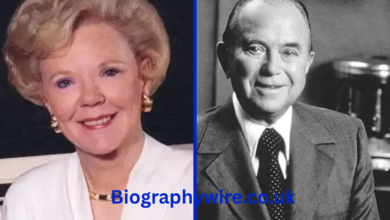
Jane Dobbins Green: The Quiet Hollywood Insider Who Became Ray Kroc’s Forgotten Wife

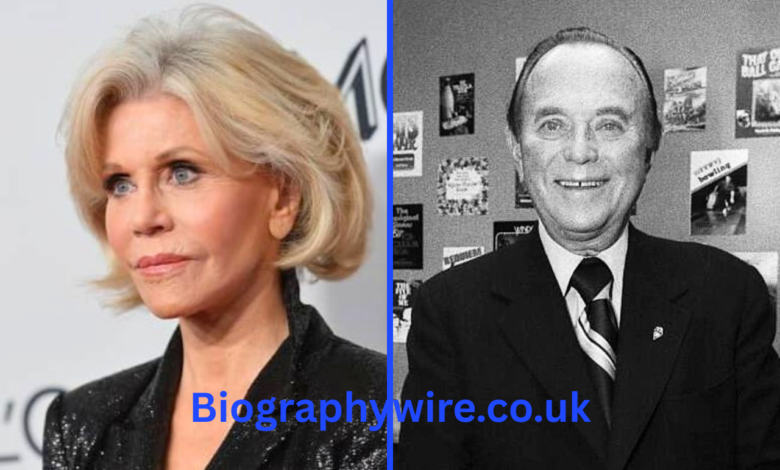
When you hear the name Ray Kroc, you probably think of golden arches, billion-dollar franchises, and the man who turned a small California burger stand into a global fast‑food empire. But behind every empire‑builder is a personal story filled with chapters that don’t always make it into the history books. One of those chapters belongs to Jane Dobbins Green—a woman who moved through the glittering circles of Hollywood’s Golden Age, worked alongside one of cinema’s biggest legends, and briefly shared her life with one of America’s most ambitious businessmen. Yet, unlike the flamboyant personalities who surrounded her, Jane chose a path of quiet dignity, privacy, and grace. Her story isn’t about burgers or boardrooms—it’s about a woman who knew her own worth and never let the spotlight define her.
Quick Facts
| Detail | Information |
|---|---|
| Full Name | Jane E. Dobbins Whitney (later Jane Dobbins Green / Jane Kroc) |
| Date of Birth | November 22, 1911 |
| Place of Birth | Walla Walla, Washington, USA |
| Date of Death | August 7, 2000 |
| Age at Death | 88 years old |
| Place of Death | Los Angeles, California, USA |
| Nationality | American |
| Ethnicity | Caucasian (white) |
| Parents | Warren David Dobbins and Grace Myrtle Duncan |
| Siblings | One infant sister, Eula Grace, who passed away early |
| Profession | Celebrity ex-wife, former secretary to John Wayne |
| Famous For | Second wife of McDonald’s founder Ray Kroc |
| Ex‑Husband | Ray Kroc (married 1963–1968) |
| Children | None |
| Net Worth | Never publicly disclosed |
| Social Media | None (passed away before the social media era) |
Early Life: A Quiet Beginning in Walla Walla
Long before she ever set foot on a Hollywood soundstage or dined with fast‑food royalty, Jane Dobbins Green was simply a girl from Walla Walla, Washington. Born on November 22, 1911, she entered the world at a time when America was still finding its footing in the early decades of the twentieth century. Walla Walla was a modest agricultural town, far removed from the glitz and glamour that would later define much of her adult life. But it was precisely this grounded upbringing that shaped the woman she would become.
Jane was the daughter of Warren David Dobbins and Grace Myrtle Duncan. Her parents divorced when she was young—a difficult experience that left an indelible mark on her childhood. Her mother later remarried a man named Theodore Frechette, and Jane also experienced the heartbreak of losing her infant sister, Eula Grace. These early losses and family changes may have contributed to Jane’s lifelong preference for privacy and stability. She learned, perhaps earlier than most, that life’s greatest certainties are often the ones you create for yourself.
Growing up in the Pacific Northwest, Jane developed a strong sense of independence and discretion. She wasn’t born into wealth or fame; her family valued hard work, education, and personal integrity. These values would stay with her throughout her life, guiding her decisions even when she found herself in the orbit of some of the most powerful men in America.
From Small‑Town Girl to Hollywood Insider
As she came of age, Jane’s ambition pulled her westward—all the way to the entertainment capital of the world: Hollywood. But she didn’t arrive as a starry‑eyed ingénue hoping to land a movie role. Jane was a capable, serious professional who understood that power often operates behind the scenes. She found work as a secretary, and not just any secretary—she became the personal secretary to none other than John Wayne, one of the most iconic actors in cinema history.
This was no ordinary administrative job. In the Golden Age of Hollywood, being the gatekeeper to a superstar of Wayne’s magnitude meant being a confidante, a problem‑solver, and a trusted right hand. Jane managed his correspondence, shielded him from the relentless press, and navigated the complex social logistics that came with managing a global celebrity. She was an integral part of the machinery that kept Hollywood’s elite running smoothly.
Working for John Wayne placed Jane at the very heart of Hollywood’s inner circle. She rubbed shoulders with directors, producers, and stars, all while maintaining a reputation for being utterly dependable and professional. It was here, in the high‑pressure environment of Tinseltown, that Jane honed the quiet strength and composure that would later attract another powerful man—Ray Kroc.
A Fateful Meeting at the Criterion Restaurant
In 1957, Jane’s path crossed with Ray Kroc at the Criterion Restaurant in St. Paul, Minnesota. At the time, Ray was already a rising force in the business world, having transformed McDonald’s from a single restaurant into a rapidly expanding franchise. But that evening, he wasn’t in full “business mogul” mode—he was showcasing his musical side, playing the organ at the restaurant.
Jane was captivated. Ray was a man in constant motion, driven by an almost obsessive ambition to build something massive. Jane, in contrast, was a figure of composure and quiet influence. It was a fascinating collision of worlds—Hollywood glamour meeting fast‑food hustle. The details of their first encounter remain lost to history, but what followed was a whirlwind romance that would lead to marriage.
Marriage to Ray Kroc: A Brief but Significant Chapter
On February 23, 1963, Jane Dobbins Green became the second Mrs. Ray Kroc. Their wedding marked the beginning of a new chapter—not just for them, but for the public narrative surrounding one of America’s most famous businessmen. Ray had divorced his first wife, Ethel Fleming, in 1961 after nearly forty years of marriage. Jane stepped into a role that came with immense public attention, yet she chose to remain elusive and private throughout.
Life as the wife of Ray Kroc was far from easy. Kroc was known for his sharp, sometimes abrasive personality and his relentless focus on business. While he was busy building McDonald’s into a household name, Jane preferred to stay out of the limelight. Unlike some spouses of powerful business figures who embrace public roles, Jane kept her distance from the media. She didn’t give interviews, she didn’t pose for magazine spreads, and she certainly didn’t write a tell‑all book.
During their five years of marriage—from 1963 to 1968—the couple never had children. Jane played a critical role in Ray’s personal life, offering support and guidance during a period of intense business expansion. But the marriage was not destined to last. By 1968, the couple had parted ways.
Life After Divorce: A Return to Privacy
After her divorce from Ray Kroc, Jane did something remarkable: she simply disappeared from the public eye. She didn’t seek revenge, didn’t air dirty laundry, and didn’t attempt to capitalize on her famous ex‑husband’s name. Instead, she returned to the private life she had always valued.
Ray moved on quickly, marrying his third wife, Joan Beverly Kroc, in 1969—a marriage that lasted until his death in 1984. Joan became a well‑known philanthropist and public figure in her own right. Jane, meanwhile, chose a path of quiet dignity. She lived out her remaining years away from the cameras and the gossip columns, a decision that only deepened the mystery surrounding her.
Her choice to remain private was not a sign of weakness. It was a deliberate act of self‑preservation. Those who knew her described a woman of grace and dignity, someone who was not defined by her famous husband but by her own values and character. Jane found happiness not in fame or fortune, but in a life lived on her own terms.
Final Years and Passing
Jane Dobbins Green passed away on August 7, 2000, in Los Angeles, California, at the age of 88. The cause of death was attributed to natural causes—simply old age. She died quietly, much as she had lived, without fanfare or public mourning. Her passing marked the end of a life that had touched two of America’s most iconic industries: Hollywood and fast food.
Net Worth and Financial Standing
Jane Dobbins Green’s personal net worth was never publicly disclosed. Unlike many celebrity spouses who leverage their connections for financial gain, Jane never sought to monetize her association with Ray Kroc. However, her ex‑husband’s wealth was substantial. At the time of his death in 1984, Ray Kroc’s net worth was estimated at more than $600 million. Adjusted for inflation, that figure would be approximately $1.4 billion today.
Given the lack of a public divorce settlement or any financial disclosures, it’s unclear what, if any, financial arrangements were made between Jane and Ray after their split. What is clear is that Jane never seemed motivated by money. She lived modestly, valued her privacy, and never sought the trappings of wealth that often accompany high‑profile marriages.
Social Media and Public Presence
Jane Dobbins Green passed away in 2000, long before the advent of social media platforms like Instagram, Twitter, or LinkedIn. As such, she has no official social media presence. Her legacy, however, lives on through the articles, documentaries, and online discussions that continue to explore her life and her brief but intriguing marriage to Ray Kroc.
In recent years, interest in Jane has grown, particularly following the release of The Founder (2016), the biographical film about Ray Kroc starring Michael Keaton. The film largely overlooked Jane’s role in Kroc’s life, focusing instead on his relationship with his third wife, Joan. This omission has sparked renewed curiosity about the “forgotten” wife who chose silence over spectacle.
Recent Updates and Legacy
In the years since her passing, Jane Dobbins Green has become something of a historical curiosity—a figure whose life invites more questions than answers. Her story is a reminder that not everyone who brushes against greatness seeks to be remembered for it. Some people simply want to live authentically, on their own terms, without the glare of public scrutiny.
Recent articles and blog posts have attempted to piece together her life, drawing from scattered records and the memories of those who knew her. These efforts have helped shine a light on a woman who, for too long, was reduced to a footnote in the McDonald’s story. Jane’s legacy is one of quiet resilience, personal integrity, and the courage to walk away from fame when it no longer served her.
Personal Life, Beliefs, and Character
Those who knew Jane Dobbins Green describe her as a woman of substance—thoughtful, observant, and fiercely independent. She was not the type to be swept up in the trappings of celebrity. Even during her marriage to Ray Kroc, she maintained her own identity and refused to be defined solely by her husband’s success.
Jane’s early experiences—her parents’ divorce, the loss of her sister, and her rise from a small town to Hollywood—shaped her into someone who valued stability, privacy, and genuine human connection. She was known to have a sharp mind and a keen ability to read people and situations. These qualities served her well, both in her career as John Wayne’s secretary and in her brief time as Ray Kroc’s wife.
It’s also worth noting that Jane’s story challenges the stereotype of the “trophy wife.” She was not a passive figure who simply enjoyed the fruits of her husband’s labor. She was a professional in her own right, a woman who had built a career and a reputation before she ever met Ray Kroc. Her decision to step away from the public eye after their divorce was not an act of defeat—it was an act of self‑determination.
Lessons from Jane Dobbins Green’s Journey
Jane Dobbins Green’s life offers several powerful lessons. First, it reminds us that fame is not the only measure of a life well lived. Jane had every opportunity to bask in the spotlight, yet she chose privacy over publicity, substance over spectacle. In an age of constant self‑promotion, her story is a refreshing counterpoint.
Second, Jane’s journey teaches us about the importance of knowing your own worth. She didn’t cling to a marriage that no longer served her; she walked away with dignity and built a life on her own terms. She understood that a person’s value is not determined by the company they keep, but by the integrity they maintain.
Finally, Jane’s life is a testament to the power of quiet resilience. She faced personal tragedy, navigated the complexities of Hollywood, and weathered a high‑profile divorce—all without losing her sense of self. Her story may be a whisper in the grand narrative of American business history, but it’s a whisper worth listening to.
Conclusion
As Jane Dobbins Green continues to be rediscovered by new generations, her story stands as a reminder of how resilience, discretion, and purpose can shape a meaningful legacy. She was never the loudest voice in the room, nor did she ever want to be. But her quiet strength, her unwavering commitment to her own values, and her refusal to be defined by the men in her life make her a figure worth remembering.
In a world that often celebrates noise over nuance, Jane Dobbins Green offers a different kind of inspiration—one that reminds us that true character is revealed not in how we seek the spotlight, but in how we conduct ourselves when no one is watching. Her legacy is not one of burgers or box‑office hits, but of grace, independence, and the quiet courage to live life on your own terms.
Read this to: Stacie Zabka Biography: The Private Businesswoman Behind Hollywood’s Most Enduring Marriage
Frequently Asked Questions (FAQs)
1. Who was Jane Dobbins Green?
Jane Dobbins Green was an American woman best known as the second wife of Ray Kroc, the businessman who built McDonald’s into a global fast‑food empire. Before her marriage, she worked as the personal secretary to Hollywood legend John Wayne.
2. When was Jane Dobbins Green born?
She was born on November 22, 1911.
3. Where was Jane Dobbins Green born?
She was born in Walla Walla, Washington, USA.
4. How long was Jane Dobbins Green married to Ray Kroc?
Jane and Ray Kroc were married for five years, from 1963 to 1968.
5. Did Jane Dobbins Green have any children?
No, Jane and Ray Kroc did not have any children together.
6. What happened to Jane Dobbins Green after her divorce?
After divorcing Ray Kroc in 1968, Jane stepped completely out of the public eye and lived a private life away from media attention.
7. When did Jane Dobbins Green die?
She passed away on August 7, 2000, in Los Angeles, California, at the age of 88.
8. What was Jane Dobbins Green’s net worth?
Her personal net worth was never publicly disclosed.
9. Did Jane Dobbins Green appear in the movie The Founder?
No, the 2016 film The Founder, which chronicles Ray Kroc’s rise, largely overlooked Jane’s role in his life, focusing instead on his third wife, Joan.
10. What was Jane Dobbins Green’s profession before marrying Ray Kroc?
Before her marriage, Jane worked as the personal secretary to actor John Wayne, a role that placed her at the center of Hollywood’s Golden Age.
11. Why is Jane Dobbins Green considered a “forgotten” figure?
Because she chose to live a private life, never gave interviews, and avoided the public spotlight even during her marriage to one of America’s most famous businessmen.
12. Where is Jane Dobbins Green buried?
Public records do not specify her burial location, consistent with her lifelong preference for privacy.