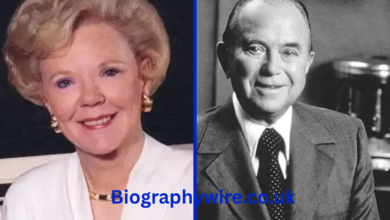
Don Baskin Net Worth: The Story of a Music Icon and His Enduring Legacy


Some names echo through time not because of relentless self-promotion, but because of a single, unforgettable moment that captures the spirit of an era. Don Baskin is one such name. For many, he is forever frozen in 1966 as the charismatic lead singer of the Syndicate of Sound, delivering the snarling, garage-rock classic “Little Girl.” For others, his later life reveals a fascinating chapter of innovation and entrepreneurial spirit. This is the story of a man whose impact stretched far beyond a single hit, a tale of musical triumph, creative reinvention, and a lasting legacy that continues to fascinate fans and curious minds alike. When people search for Don Baskin’s net worth, they are often uncovering a story much richer than a simple financial figure—it’s a journey through rock history and beyond.
Don Baskin: Quick Facts
| Category | Details |
|---|---|
| Full Name | Donald Joseph Baskin |
| Born | October 9, 1946 |
| Died | October 22, 2019 (age 73) |
| Birthplace | Honolulu, Hawaii |
| Profession | Musician, Singer, Songwriter, Studio Musician, Entrepreneur |
| Famous For | Lead Singer of Syndicate of Sound, co-writer of the 1966 hit “Little Girl” |
| Parents | Son of a U.S. Air Force Colonel |
| Siblings | Homer Ray Baskin II |
| Spouse | Joan Chiasera |
| Net Worth at Death | Not publicly disclosed; largely derived from music royalties and later business ventures. |
The Early Years and a Musical Calling
Born on October 9, 1946, in Honolulu, Hawaii, Don Baskin’s early life was anything but settled. As the son of a U.S. Air Force Colonel, his childhood was a tapestry of different places, moving between military bases across the United States and Germany before his father eventually retired in San Jose, California . This nomadic lifestyle could have been disorienting, but for Baskin, it seems to have fostered a sense of adaptability and a broad perspective that would serve him well.
It was in San Jose that the seeds of his musical destiny were sown. He picked up the saxophone in junior high school, quickly developing a talent that would open doors . Music became his anchor, a creative outlet and a way to connect with others. By 1961, he had joined his first rock band, the Pharoahs, marking the beginning of a journey that would soon see him become a household name . His early experiences playing in local bands like Lenny Lee and the Nightmen were a crucial education, teaching him the craft of performance and the dynamics of group collaboration that would later define his career .
The Rise of the Syndicate of Sound and “Little Girl”
The pivotal moment came in 1964 when Baskin teamed up with his friend and bassist, Bob Gonzalez, to form the Syndicate of Sound . The lineup solidified with John Sharkey on keyboards, Larry Ray on lead guitar, and John Duckworth on drums . The band quickly became a fixture in the vibrant San Jose music scene, but their fate was about to change forever.
In January 1966, Baskin and Gonzalez co-wrote and recorded a song that would define their legacy: “Little Girl” . Recorded on the independent Hush label, the track initially achieved only local success. However, its raw energy and catchy, defiant lyrics caught the attention of Bell Records in New York, which picked it up for national distribution . The song was an instant sensation, climbing the Billboard Hot 100 to peak at number 8 . With Baskin’s sneering, confident lead vocal at the forefront, “Little Girl” became a garage-rock anthem, influencing countless musicians and becoming a signature of the 1960s.
The band was thrown into the whirlwind of sudden fame. They were rushed to record a full album, Little Girl, in just three weeks with a budget of only $1,500 . The effort was a success, and they went on to enjoy two more Billboard chart hits with “Rumors” in 1966 and “Brown Paper Bag” in 1970 . They shared stages with legendary acts like Paul Revere & the Raiders, the Young Rascals, and even James Brown . The Syndicate of Sound had arrived.
The Journey of a Working Musician
Despite their success, the band’s time in the limelight was relatively brief. The Syndicate of Sound disbanded in 1970, a common story for many bands of that era . But for Don Baskin, this was not an end; it was a transition. He didn’t step away from music but instead moved into a new phase of his career, working as a sought-after studio musician and arranger in Hollywood from 1970 to 1973 .
This period showcased his versatility and deep musical talent. He wasn’t just a one-hit-wonder singer; he was a gifted saxophonist, guitarist, and arranger who could adapt to any studio environment. His passion for performance soon called him back to the stage, leading him to form the country band Wichita, a group that eventually played at the famous Gilley’s Club in Houston, Texas . In 1981, he formed yet another band, Gypsy, continuing to write, produce, and record with them until 1986 . He also performed with a ’50s and ’60s revue band called The Corvettes . This period demonstrated a commitment to music that transcended fame or fortune; it was a lifelong vocation.
In the 1990s, a wave of nostalgia and renewed interest in garage-rock led Baskin, Gonzalez, and Duckworth to reunite the Syndicate of Sound . They became moderately active, accepting select concert invitations and reliving their glory days. Their legacy was cemented when the Rock & Roll Hall of Fame featured “Little Girl” in its “One Hit Wonders” section, with the song reportedly played for visitors every 20 minutes . This recognition was a testament to the song’s enduring power and a source of immense pride for Baskin, a validation that his work had earned a permanent place in rock history.
Innovation and a Pioneering Spirit
Don Baskin’s story takes an intriguing turn in his later years, revealing a mind that was always thinking ahead. In the mid-1990s, he channeled his industry experience into a new venture. He collaborated with Billboard magazine to create a certification process for artists who had achieved Top Ten chart success, a project that resulted in exclusive rings and plaques for these musicians . It was a clever way to celebrate and solidify a legacy.
His most significant entrepreneurial leap came in 2000, when a simple visit to a veterinarian’s office sparked a brilliant idea. Seeing that pets were being implanted with microchips for identification and recovery, he wondered: “Why not musical instruments?” . He had personal experience with this pain point, having lost a prized soprano saxophone as a child. This epiphany led to the founding of SNAGG (“Serial Number Authority for Global Goods”) . The company pioneered the use of radio frequency microchips to track and register instruments, protecting them from theft and providing a system for inventory management. He teamed up with veteran music publicist Jeff Albright and successfully partnered with major manufacturers like Fender, Gibson, and Carvin . For his work, he is considered a pioneer in the musical instrument security segment, a testament to his inventive spirit .
Personal Life and Legacy
Don Baskin’s later years were filled with music and the company of loved ones. He shared a 36-year relationship with his wife, Joan Chiasera, who he met when she auditioned for a band he was in . Their love story was a beautiful, full-circle moment, as she had been a fan of “Little Girl” as a teenager, listening to it on her transistor radio .
He continued to perform and innovate until his death, even founding a band called Popcorn, which performed cinematic songs . Don Baskin passed away peacefully in his sleep at his home in Northern California on October 22, 2019, at the age of 73 . He was survived by his wife, his brother, and a musical legacy that continues to inspire.
Don Baskin Net Worth: A Balanced Overview
When discussing Don Baskin’s net worth, it’s essential to understand that his legacy is primarily cultural rather than financial. His income came from several sources over his long career: initial music royalties from the Syndicate of Sound, earnings as a studio musician and session work, and later revenue from his entrepreneurial ventures like SNAGG and his band, Popcorn . While he achieved significant success and lived a comfortable life centered around his passion, his net worth has never been publicly disclosed. Unlike the other Don Baskin who is a Tennessee car dealer, this Don Baskin is firmly rooted in the music industry . His true wealth was in his creative contributions, his role in shaping rock history, and the joy he brought to fans around the world.
Read this to: Channetta Valentine: The Untold Story of Nelly’s First Love and the Woman Who Chose Privacy Over Fame
FAQs About Don Baskin
1. Who was Don Baskin?
Don Baskin was an American musician, singer, and songwriter best known as the lead vocalist of the 1960s garage-rock band Syndicate of Sound. He co-wrote and sang their legendary 1966 hit, “Little Girl,” and had a long career in music as a performer, arranger, and studio musician .
2. What is Don Baskin most famous for?
He is most famous for his work with the Syndicate of Sound, particularly their iconic song “Little Girl,” which peaked at number 8 on the Billboard Hot 100 in 1966. The song is considered a classic of the garage-rock genre .
3. Was Don Baskin a car dealer?
No. There is often confusion because there is a successful businessman and car collector named Don Baskin who runs a truck sales company in Tennessee. Don Baskin, the musician, lived in California and passed away in 2019 .
4. What other bands did Don Baskin play in?
After the Syndicate of Sound disbanded in 1970, Baskin played with several other bands. He formed a country band called Wichita, a rock band called Gypsy, and later performed with The Corvettes and a band called Popcorn .
5. Did Don Baskin invent anything?
Yes, he was an innovator in the music industry. In 2000, he founded a company called SNAGG, which pioneered the use of radio frequency microchips to identify, register, and track musical instruments to prevent theft .
6. When did Don Baskin die?
Don Baskin passed away on October 22, 2019, at the age of 73 .
7. What is Don Baskin’s net worth?
Unlike the businessman of the same name, there is no public record of the musician Don Baskin’s exact net worth. His income came from music royalties, studio work, and his later business ventures. His true legacy is cultural rather than financial.
Conclusion
Don Baskin’s journey is a powerful reminder that success is not always a linear path to untold riches. It’s a story of passion, creativity, and resilience. He rode the thrilling wave of a number-eight hit, navigated the challenges of a changing music industry, and never stopped making music. He was more than just a one-hit wonder; he was a dedicated musician, a talented performer, and an innovative thinker who left an indelible mark on rock and roll. His story teaches us that true legacy is built on a lifetime of dedication to one’s craft, and that sometimes, a single, perfect moment—a song like “Little Girl”—is enough to echo through the ages, inspiring generations to come.