Caroline Davies: The BBC Transport Correspondent Reporting from the Front Lines of Global News

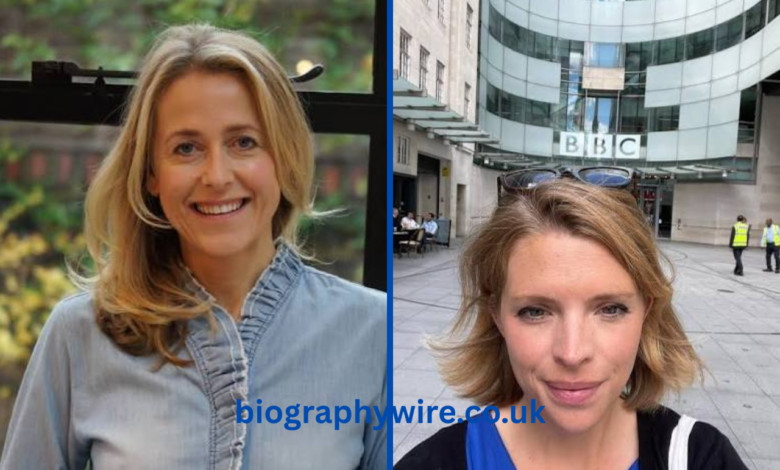
In an era where news cycles spin faster than ever and breaking stories erupt from every corner of the globe, few journalists possess the versatility to navigate the chaotic streets of London’s transport system one day and the politically volatile atmosphere of Moscow the next. Yet, that is exactly the professional terrain that Caroline Davies has mastered. She isn’t just a face on the screen; she is the calm, authoritative voice that deciphers the complex machinery of national infrastructure one morning and unravels the dangerous intricacies of geopolitical conflict the next evening. As a BBC Transport Correspondent turned Moscow Correspondent, her journey from the newsrooms of Oxford to the front lines of the Ukraine crisis is a compelling narrative of intellectual rigor, relentless curiosity, and the courage to stand where the story is unfolding. For viewers of the BBC News at Six and BBC World News, Davies has become a trusted guide—whether she is explaining why a rail strike is paralyzing the United Kingdom or analyzing the economic fallout of sanctions in a frozen Russian square. This is the story of how a student of Philosophy, Politics, and Economics became one of the most resilient voices in modern British journalism.
Quick Facts About Caroline Davies
| Category | Details |
|---|---|
| Full Name | Caroline Davies |
| Profession | Journalist, BBC Transport Correspondent, Former BBC Moscow Correspondent |
| Age | Early to Mid 30s (Exact Birth Date Private) |
| Birthplace | United Kingdom |
| Education | BA (Hons) in Philosophy, Politics and Economics (PPE) – University of Oxford; James Allen’s Girls’ School |
| Parents | Private / Undisclosed |
| Siblings | Private / Undisclosed |
| Marital Status | Married (Wedding took place on December 7, 2019) |
| Spouse | Name Not Publicly Disclosed |
| Current Role | Transport Correspondent, BBC News (as of December 2020) |
| Notable Former Roles | BBC Moscow Correspondent, Business Correspondent, Freelance Producer for Sky News |
| Estimated Net Worth | Approximately $60,000 – $80,000 (Estimated based on industry standards) |
| Social Media | Twitter: @caroline_gm_d |
The Formative Years: Oxford and the Power of the PPE
To understand Caroline Davies the journalist, one must first look at Caroline Davies the student. Unlike many who fall into journalism by accident, Davies pursued an academic path that was purposefully designed to dissect the world. She attended James Allen’s Girls’ School, a prestigious independent school in London, where her aptitude for debate and analysis first began to surface. But it was her time at the University of Oxford that truly forged her intellectual spine. Between 2008 and 2011, she immersed herself in the famous Philosophy, Politics, and Economics (PPE) course.
This is not a degree for the faint of heart. It demands that students understand the abstract reasoning of philosophers, the power structures of political systems, and the cold mathematics of economic theory. For Davies, this triad of knowledge would become her secret weapon. While other reporters might see a train delay as a mere nuisance, Davies sees the economic policy behind the funding, the political infighting causing the strike, and the human philosophy of why workers are walking out. Her childhood environment in the UK, likely steeped in the fast-paced news culture of London, shaped a personality that values precision, evidence, and clarity. She grew up in an era of digital transition, watching the BBC adapt from analog to streaming, and she knew that she wanted to be part of that evolution.
The Climb Up the Media Ladder
Every great journalist has a “sketchy” period of freelancing and odd hours, and Davies is no exception. Graduating in 2011, she didn’t immediately land a primetime anchor chair. Instead, she put in the work. Her early career is a masterclass in diversification. She served as a Contributing Editor for Lux Magazine and an Editorial Assistant for Baku Magazine, honing her ability to write for niche, high-end audiences. She also worked at Condé Nast International, a behemoth in the publishing world, where she learned the rhythms of feature writing.
However, her heart was in broadcast. In January 2013, she took a hands-on role at ZoneOneRadio as a presenter and producer. Radio is often called the “theater of the mind,” and it is an unforgiving training ground. You have no visuals to fall back on; you must paint the picture with words alone. This audio-first discipline gave her broadcasts a rich, descriptive quality that stands out on television.
She briefly dipped her toe into the competitive waters of Sky News as a freelance producer in early 2015. But it was November 2014 that marks the true beginning of her rise at the BBC. Initially joining the corporation, she moved through various roles, absorbing the unique culture of the British Broadcasting Corporation—a commitment to impartiality, accuracy, and public service.
Breaking Ground as the Transport Correspondent
In December 2020, Caroline Davies stepped into a role that is notoriously high-pressure: BBC Transport Correspondent. On the surface, “transport” might sound dry, but in the UK, it is a hotbed of political warfare. The transport brief covers everything from HS2 (the high-speed rail project) to airline collapses, and most critically, the union strikes that paralyze the Tube and national rail networks.
When Davies appears on screen to discuss a rail strike, she doesn’t just read a script. She brings the viewer into the negotiation room. She explains the why—the economic pressures, the technological changes, the fatigue of the workforce. Her reporting on the six and ten o’clock news is characterized by a smooth, calm authority. She turns chaotic travel disruption into digestible narratives, advising millions of commuters on how to navigate their lives. It is a role that requires immense trust, and she has earned it through factual rigor.
The Moscow Mission: Reporting Under Fire
While many journalists were content to cover the war in Ukraine from a studio in London, Caroline Davies took her talents to the front line of the information war. In early 2022, she transitioned to the role of BBC Moscow Correspondent. The timing could not have been more critical. As Russian tanks massed on the Ukrainian border, Davies was one of the few British voices broadcasting from inside the Russian capital.
Her work during this period showcased her immense bravery. Reporting from Moscow during a conflict is a high-stakes game. The Russian government had cracked down on independent media, labeling journalists as “foreign agents” and passing strict censorship laws against “disinformation” (i.e., reporting the reality of the war).
In one of her most memorable dispatches, Davies interviewed Russian journalist Marina Ovsyannikova, the woman who stormed a live state TV broadcast holding a sign that read “No War” against the Kremlin’s narrative. Securing this interview was dangerous; it put a spotlight on dissent in a country where dissent can lead to prison. Davies handled the interview with poise, allowing Ovsyannikova to speak while contextualizing the immense personal risk involved. This moment solidified Davies not just as a correspondent, but as a historian of the present. She didn’t just report the news; she captured the moral conflict of the era.
Private Life and the Mystery of the Davies Household
Despite her public-facing career, Caroline Davies is notably private. In an age where journalists are often forced to become influencers, she has managed to build a wall between her reporting and her personal identity. We know that she is married. According to verified records, she exchanged vows with her long-term partner on December 7, 2019.
However, the identity of her husband remains a mystery. This is likely a deliberate choice. For a journalist covering geopolitics and transport logistics—stories that often require travel at a moment’s notice—keeping family life out of the spotlight allows for a degree of safety and normalcy. There are no public photos of lavish weddings splashed across tabloids. Instead, the focus remains squarely on her work.
Her daily routine is likely dictated by the “breaking news” alarm. A transport correspondent rarely has a 9-to-5 schedule. When a train derails at 3 AM or a strike is called at 6 AM, Davies is on the move. When she is not chasing stories, her interests likely mirror her academic background: reading political biographies, following economic trends, and exploring the cultural hubs of the cities she lives in. Her life is a balancing act of high-adrenaline reporting and quiet, grounded personal time.
Net Worth and Income Sources
When discussing a public service broadcaster like the BBC, the topic of money is often publicly documented, yet remains sensitive. As of 2024, estimates regarding Caroline Davies’ net worth vary, but a realistic figure places her in the range of $60,000 to $80,000 annually, with a total net worth estimated similarly.
It is important to note that the BBC operates on a public license fee model. While star anchors can command high salaries, correspondents like Davies are paid for their expertise and field experience. Some sources list a salary closer to $19,000, but this likely reflects an early-career base figure or a specific freelance contract. Given her seniority as a Moscow and Transport correspondent, her actual compensation is certainly higher—commensurate with the danger of foreign posting and the complexity of the transport brief.
Her income is derived strictly from her salary as a journalist. Unlike “influencers” or media personalities, Davies does not appear to monetize her social media for personal gain. She is a pure journalist, meaning her income flows from her broadcast appearances, digital bylines, and perhaps speaking engagements or contributions to academic journals. She lives a comfortable, middle-to-upper-class lifestyle typical of a senior BBC editor, but without the ostentation of celebrity culture. Her wealth is in her experience and the respect of her peers.
Social Media and Digital Presence
If you search for Caroline Davies on Twitter, you will find her handle: @caroline_gm_d. Her use of social media is a textbook example of professional restraint. She does not use Twitter or Instagram to share her breakfast or argue with trolls. Instead, her feed is a curated stream of her work.
When she was in Moscow, she used social media to pin her location, posting the mandatory selfie in front of St. Basil’s Cathedral to announce her new posting. She uses LinkedIn to mark professional milestones, often reflecting on the “busy” nature of breaking stories. For the audience, following Caroline Davies is not about gossip; it is about access. She retweets BBC articles, provides minor updates on transport situations, and occasionally shares a glimpse of the newsroom chaos. She speaks to the audience as a peer—respectful, informative, and just a little bit weary of the daily grind of the news cycle, which makes her incredibly relatable.
Recent Updates and Future Horizons
Where is Caroline Davies now? After her high-profile stint in Moscow covering the invasion of Ukraine, she has returned to the core of the BBC operation, continuing her vital role as the Transport Correspondent. However, the lines have blurred. Her time in Russia has added a layer of geopolitical weight to her domestic reporting. When she discusses supply chains or fuel prices, viewers know she has seen the oil fields; when she discusses cyber attacks on rail networks, viewers know she has reported on state-sponsored hackers.
Looking ahead, Caroline Davies is at a pivotal point in her career arc. With experience in feature writing, radio, television, and war correspondence, she is a candidate for higher editorial roles or prime-time presenting positions. Yet, she seems to relish the “on the ground” reporting. Her future goals likely involve mentoring the next generation of female journalists entering the field of hard news. She represents the new BBC: diverse in skill, fearless in execution, and deeply knowledgeable.
Conclusion: A Legacy Built on Resilience
As BBC Caroline Davies continues to pave the way for future generations, her story stands as a reminder of how resilience and purpose can shape a meaningful legacy. She did not rise to fame through viral moments or manufactured drama. She rose through the ranks of Oxford, through the static of local radio, through the rain-soaked train stations of Britain, and through the icy political streets of Moscow.
Her legacy is one of quiet strength. In a world where “breaking news” often means speculation, Caroline Davies deals in facts. She shows us that journalism is still a noble profession—one that requires patience, education, and a thick skin. For aspiring journalists, her life is a lesson: study the humanities, learn how the economy works, be willing to take the difficult postings, and always keep your private life private enough to protect your sanity.
Whether she is explaining the complexities of a new railway line or the tragedy of a bombed-out Ukrainian theater, Caroline Davies is the guide you want by your side. She turns complexity into clarity, and in doing so, she upholds the very best of what the BBC stands for. As she looks toward the future, one thing is certain: wherever the story is, Caroline Davies will be there, microphone in hand, ready to tell it straight.