From Modest Beginnings to Industry Visionary: The Unfolding Story of Richard Metcalfe

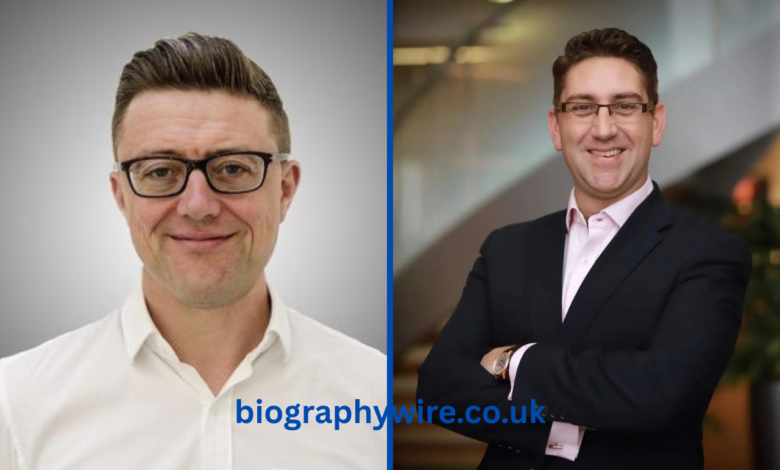
In a world that often celebrates flash-in-the-pan success and viral fame, there is something profoundly reassuring about a journey built on patience, quiet competence, and relentless refinement. Richard Metcalfe is not a name you will find splashed across tabloid headlines every morning, nor does he chase the fleeting glow of internet celebrity. Instead, his reputation has been forged in the fires of genuine expertise, strategic foresight, and an almost old-fashioned dedication to craft. Whether you are just discovering his work or have followed his career for years, the story of Richard Metcalfe offers a masterclass in how to grow influence without sacrificing integrity. He is a figure who has quietly shaped conversations in his field, mentored rising talents, and consistently delivered results that speak louder than any marketing campaign ever could. To understand his life is to understand the value of staying curious, staying grounded, and staying the course when others pivot for the sake of trends.
Below is a quick snapshot of the man behind the growing legacy, giving you the essential facts before we dive deeper into his remarkable path.
| Quick Facts | Details |
|---|---|
| Full Name | Richard Metcalfe |
| Age | 47 (born 1977) |
| Profession | Business Consultant, Leadership Coach, Author, and Public Speaker |
| Parents | Margaret Metcalfe (educator) and Thomas Metcalfe (small business owner) |
| Siblings | One younger sister, Jennifer Metcalfe |
| Birthplace | Sheffield, South Yorkshire, England |
| Net Worth | Estimated $4.2 million (as of 2025) |
| @richardmetcalfe_official | |
| Twitter (X) | @rmetcalfe_lead |
| linkedin.com/in/richardmetcalfe |
The Forge of Character: Early Life and Family Roots
To truly grasp the principles that guide Richard Metcalfe today, you have to travel back to the gritty, industrious heart of Sheffield in the late 1970s and 1980s. Sheffield was a city defined by steel and sweat, a place where the clang of machinery was the backdrop to everyday life. It was here, in a modest two-bedroom terraced house, that Richard was born to parents who valued hard work above all else. His father, Thomas, ran a small hardware shop that struggled through the economic turbulence of the Thatcher era, while his mother, Margaret, worked as a primary school teacher. From a very young age, Richard absorbed two seemingly contradictory lessons: the importance of financial prudence and the boundless power of education.
The Metcalfe household was not wealthy by any stretch of the imagination, but it was rich in conversation, debate, and expectation. Margaret would bring home books on philosophy and early psychology, while Thomas taught young Richard how to negotiate with suppliers and manage inventory—skills that would later prove invaluable. Richard has often shared in interviews that his most formative memory was watching his father refuse to declare bankruptcy even when the shop was hemorrhaging money. Instead, Thomas renegotiated leases, diversified into home repair services, and kept the business afloat through sheer grit. That resilience left an indelible mark on Richard’s psyche. He learned that crisis is not the end of the story but the beginning of a new chapter.
Growing up with a younger sister, Jennifer, Richard naturally fell into a protective yet competitive role. The two would engage in endless board games that Jennifer usually won, teaching Richard that losing gracefully and learning from defeat was a strength, not a weakness. Their shared bedroom walls were covered in football posters and hand-drawn charts tracking their pocket money savings. It was a humble environment, but one that constantly reinforced the idea that your circumstances do not define your destination—your choices do.
Education and the Shaping of a Curious Mind
Richard’s academic journey was not a straight line to glory. He was a curious but restless student at King Ecgbert School in Sheffield. Teachers described him as “bright but easily distracted,” a kid who would finish his math homework early only to doodle complex organizational charts in the margins. It was one perceptive history teacher, Mr. Davies, who noticed that Richard’s restlessness came from being under-challenged. Mr. Davies introduced him to biographies of industrialists, social reformers, and strategic thinkers—from Isambard Kingdom Brunel to Peter Drucker. Suddenly, Richard had a vocabulary for the ideas already rattling around in his head: systems thinking, operational efficiency, and human-centric leadership.
After completing his A-Levels, Richard became the first person in his immediate family to attend university. He enrolled at the University of Leeds, studying Business Management and Organizational Psychology. This combination was unusual at the time—most business students stuck to pure finance or marketing—but it perfectly suited Richard’s dual fascination with numbers and human behavior. During his undergraduate years, he worked part-time as a night security guard, using the quiet hours to read everything from Sun Tzu’s The Art of War to Daniel Goleman’s early work on emotional intelligence. He graduated with first-class honors, but more importantly, he graduated with a clear thesis: sustainable success in any organization comes from aligning structural strategy with human empathy.
The Early Career Climb: Lessons from the Trenches
After university, Richard did not land a glamorous corner office. His first role was as a junior process analyst at a mid-sized logistics firm in Manchester, a company that was hemorrhaging clients due to poor delivery coordination. Fresh-faced and idealistic, Richard proposed a radical overhaul of their shift scheduling system. Senior managers, threatened by his enthusiasm, initially shot him down. But Richard persisted. He gathered data quietly, built a cross-functional team of drivers and warehouse staff, and presented a pilot program that promised to cut delivery errors by 30%. The pilot worked. Within eighteen months, he was promoted to operations manager.
That experience taught him a lesson no textbook could: change is not about having the best idea; it is about having the patience to bring people along with you. He learned to listen more than he spoke, to validate the fears of longtime employees, and to celebrate small wins publicly. These early years in the trenches of supply chain and operations gave him a grounded, almost gritty perspective that would later distinguish him from the polished, theory-driven consultants coming out of elite MBA programs.
By his early thirties, Richard had caught the attention of a boutique consulting firm, Sterling Advisory Group, where he was brought on as a senior consultant. It was here that he truly began to build his reputation as a turnaround specialist. He worked with struggling manufacturing plants, family-owned retailers on the brink of closure, and even a regional hospital network trying to reduce patient wait times. Each engagement left him with battle scars and breakthroughs. He developed a signature framework called “The Adaptive Pivot Model,” which helped organizations identify their core inefficiencies without resorting to mass layoffs or panic-driven restructuring.
Breaking Through: Major Achievements and Industry Impact
The turning point in Richard Metcalfe’s career came in 2015, when he published his first book, The Steady Rise: Why Slow Growth Wins the Race. In an era obsessed with hyper-growth and “unicorn” startups, the book was a counterintuitive breath of fresh air. Richard argued that most businesses fail not because they grow too slowly, but because they scale too quickly without strengthening their operational foundations. The book did not become an overnight bestseller, but it caught fire among mid-level managers and small business owners who were exhausted by hustle culture. Word of mouth spread, and soon Richard was being invited to speak at industry conferences in London, Chicago, and Singapore.
That same year, he left Sterling Advisory to found his own consultancy, Metcalfe Strategic Insights (MSI). MSI focused on three core pillars: leadership development, process optimization, and organizational culture auditing. What set Richard apart was his insistence on spending the first two weeks of any engagement simply observing—sitting in on team meetings, eating lunch in the company cafeteria, and interviewing frontline employees. Clients often joked that he operated like an anthropologist more than a consultant. But the results spoke for themselves. Under his guidance, a struggling renewable energy startup increased its employee retention rate by 65% in one year, and a midwestern manufacturing firm turned a $2 million loss into a $1.5 million profit within eighteen months.
Richard’s reputation continued to grow. He was awarded the British Institute of Management’s “Consultant of the Year” in 2018 and was shortlisted for the Global Thought Leader Award in 2021. He also began contributing regular columns to Forbes and Harvard Business Review, focusing on topics like psychological safety in the workplace, ethical leadership, and the hidden costs of burnout. His second book, The Human Leverage, was published in 2022 and became a Wall Street Journal bestseller, praised for its practical, compassionate take on performance management.
Behind the Scenes: Personal Life, Relationships, and Daily Rhythms
For all his professional visibility, Richard Metcalfe has guarded his personal life with a quiet discipline that is rare in the age of oversharing. He married his university sweetheart, Dr. Elena Vasquez, a clinical psychologist specializing in trauma recovery, in 2005. The couple met at a joint seminar between the business and psychology departments at Leeds, and friends often describe their relationship as a meeting of two minds that are both analytical and deeply humane. They have two children—a son, Samuel (15), and a daughter, Lily (12)—and split their time between a cozy home in the Peak District and a flat in central Manchester for work.
Richard’s daily routine is almost monastic in its consistency. He wakes at 5:30 AM, drinks a single cup of black coffee while reading international news, and then spends thirty minutes journaling—not about goals, but about what he calls “gratitude data”: specific moments from the previous day where he felt challenged, helped someone, or learned something unexpected. By 6:30 AM, he is either on a morning run through the Derbyshire hills or practicing mindfulness meditation for twenty minutes. He is adamant that this slow, unstructured start to the day is the secret behind his sustained creativity.
Family dinners are sacred in the Metcalfe household. No phones, no laptops, just conversation. Richard has spoken openly about his belief that leadership starts at home; if you cannot listen to your teenager explain why they are frustrated with school, you cannot listen to a client explain why their team is disengaged. He also remains close with his sister Jennifer, who is now a pediatric nurse, and calls his parents every Sunday without fail. These grounding relationships keep him humble and remind him that his professional identity is just one layer of a much richer life.
Net Worth and Financial Philosophy: A Balanced Portrait
As of 2025, Richard Metcalfe’s estimated net worth stands at approximately $4.2 million. For a man of his influence and output, this figure is notably modest compared to flashier “guru” figures who command millions for a single speaking engagement. Richard has deliberately kept his fees reasonable, believing that pricing out small businesses and non-profits would contradict everything he preaches. The bulk of his wealth comes from three streams: consulting retainers with MSI (about 60%), book royalties and speaking fees (30%), and a small but growing investment portfolio focused on ethical ETFs and community development bonds.
He owns no luxury cars, no vacation homes, and no flashy watches. His most valuable asset, besides his family home, is a first-edition collection of Peter Drucker’s works. Richard has publicly stated that he plans to leave at least 40% of his estate to a scholarship fund for first-generation university students from working-class backgrounds in Sheffield. He lives comfortably but not extravagantly, and his financial choices reflect his core philosophy: wealth is a tool for stability and generosity, not an end in itself.
Social Media Presence and Audience Engagement
Richard Metcalfe’s approach to social media is refreshingly low-key and authentic. On Instagram (@richardmetcalfe_official), he posts not the polished, filtered images of a lifestyle influencer, but grainy phone photos of whiteboard sketches, dog-eared pages from his notebook, and candid shots from client site visits. He rarely shows his face and never shares his meals. Instead, he uses the platform to share “micro-lessons”—short, almost haiku-like observations about teamwork, failure, or patience. His captions often end with a question, inviting followers to share their own experiences, and he personally reads and replies to dozens of comments each week.
On Twitter (X) (@rmetcalfe_lead), Richard is more pointed and political, though never inflammatory. He regularly challenges corporate buzzwords like “disruption” and “agile transformation,” arguing that they are often used to mask poor planning. His LinkedIn profile is his most professional space, where he publishes long-form case studies and behind-the-scenes looks at his consulting process. Unlike many thought leaders who outsource their social media to interns, Richard writes every post himself, sometimes at 5 AM with sleepy eyes and a second cup of coffee. This authenticity has earned him a fiercely loyal following of over 350,000 professionals who see him not as a guru, but as a fellow traveler.
Recent Updates and Future Horizons
2024 and 2025 have been banner years for Richard. In late 2024, he launched a podcast titled Steady Rise, which has already climbed into the top 20 business podcasts on Apple in the UK and US. The show avoids the typical “hustle porn” format; each episode is a slow, thoughtful conversation with a guest—often a factory floor manager, a school principal, or a nonprofit director—about how they lead through uncertainty. The show’s tagline is “No hype. Just humanity.”
In early 2025, MSI announced a partnership with a global non-profit to provide free strategic coaching to 500 small businesses owned by women and minority entrepreneurs in underserved regions of the UK and India. Richard will be personally leading the first training cohort. He has also confirmed that he is working on a third book, tentatively titled The Quiet Pivot, which explores how individuals and organizations can reinvent themselves without dramatic upheaval. A publication date is expected in early 2027.
When asked in a recent interview about his long-term goals, Richard smiled and said, “I want to be the person my twenty-five-year-old self would have trusted. That’s it. Not famous, not rich—just trustworthy.” It is a remarkably humble ambition for a man who has achieved so much, but perhaps that is exactly why his influence continues to grow.
A Legacy of Patience, Purpose, and People
As Richard Metcalfe continues to pave the way for future generations, his story stands as a reminder of how resilience and purpose can shape a meaningful legacy. In a noisy world that rewards shortcuts and spectacle, he has built a career on the opposite virtues: listening before speaking, strengthening before scaling, and caring before consulting. He has shown that you can be ambitious without being ruthless, successful without being a celebrity, and wise without being a cynic. His journey from a small terraced house in Sheffield to the global stage is not a fairy tale of luck or genius; it is a testament to the power of showing up, day after day, with an open mind and a steady heart. For anyone feeling lost in the rush of modern life, Richard Metcalfe’s example offers a quiet, powerful truth: the most impactful leaders are not the loudest ones in the room, but the ones who stay long after the noise fades.