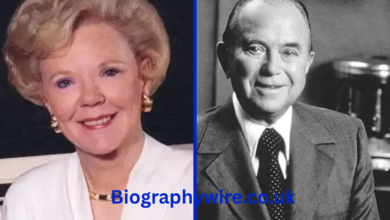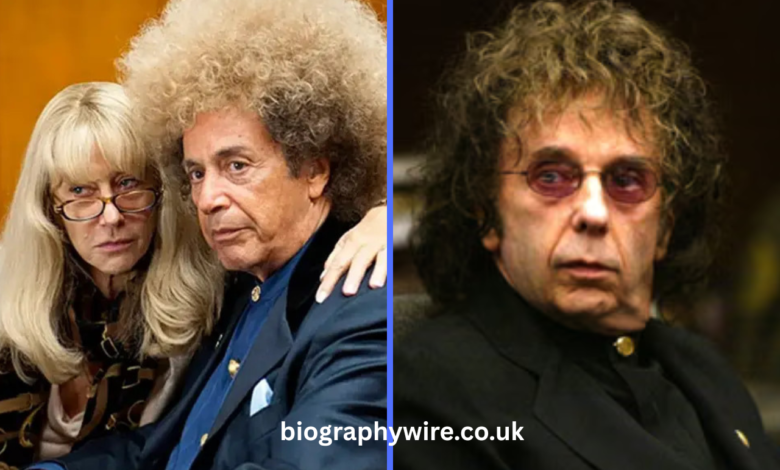
When you hear the last name “Spector,” the world of music immediately shifts into a specific, dramatic focus. It’s a name synonymous with the “Wall of Sound,” legendary production, and a story filled with both towering artistic genius and deep, public tragedy. Growing up in the shadow of such a monumental figure could easily crush a person’s sense of self. But for Donte Phillip Spector, the son of iconic record producer Phil Spector and singer Ronnie Spector, the journey has been less about carrying a legacy and more about carefully unpacking it. He is not a musician trying to replicate his father’s studio magic, nor is he simply a footnote in a tabloid headline. Instead, Donte has quietly built a life rooted in personal resilience, creative authenticity, and a deep respect for his mother’s enduring spirit. This is the story of a man learning that your last name might open doors, but only your character decides what you find on the other side.
Quick Facts About Donte Phillip Spector
| Attribute | Details |
|---|---|
| Full Name | Donte Phillip Spector |
| Age | Mid-30s (Born in the late 1980s) |
| Profession | Musician, Songwriter, Producer, Entrepreneur |
| Famous Parents | Phil Spector (Father) & Ronnie Spector (Mother) |
| Siblings | Donté Spector (twin brother), Louis Phillip Spector, Gary Phillip Spector, Nicole Spector (half-sister) |
| Birthplace | Los Angeles, California, USA |
| Estimated Net Worth | $500,000 – $1 Million (Independent music & royalties) |
| Primary Genre | Rock, Alternative, Indie, Experimental |
| @dontephillipspector (private/low profile) | |
| Twitter (X) | N/A (Preferring privacy) |
| Not publicly listed |
A Childhood Between Studio Magic and Personal Chaos
To understand Donte Phillip Spector, you have to rewind to Los Angeles in the late 1980s. He was born alongside his twin brother, Donté, to two of the most famous figures in rock history. His mother, Ronnie Spector, was the legendary lead singer of The Ronettes, the voice behind timeless hits like “Be My Baby.” His father, Phil Spector, was the revolutionary, albeit volatile, producer who changed the way records sounded. For most kids, home is a place of stability. For Donte, home was a gated estate in Alhambra, California, that doubled as a recording bunker. Early life meant being surrounded by grand pianos, gold records on the walls, and the constant hum of creative energy. But it also meant witnessing the slow unraveling of a fairy tale.
Donte and his twin brother were the center of their mother’s universe. After her traumatic divorce from Phil in 1974 (which she famously escaped barefoot, fleeing their mansion), Ronnie fought fiercely to raise her sons away from the chaos. Donte grew up understanding that his father was a complex genius—a man who created breathtaking art but was capable of terrifying darkness. Family background was not just a tree of relatives; it was a forest of trauma and triumph. His mother often kept the boys insulated from the worst of the media glare, but by the time Donte was a teenager, he knew the truth. He watched his mother rebuild her career, touring relentlessly to prove she was more than just “Phil’s ex-wife.” That resilience became the blueprint for Donte’s own character. The environment that shaped him taught him two things: music heals, and privacy is priceless.
Discovering His Own Rhythm
Unlike many children of rock royalty who are shoved into the spotlight at age five, Donte Phillip Spector took his time. Education was a priority for Ronnie. She wanted her sons to have a foundation that didn’t rely on their last name. While details of his formal schooling remain private (a testament to his desire for normalcy), it is known that Donte gravitated toward the technical side of music rather than just the performance. While his father built walls of echo and reverb in the 1960s, Donte started experimenting with modern digital audio workstations and lo-fi recording techniques in his teenage bedroom.
The turning point came not from a record deal, but from a guitar. Donte learned to play in relative isolation, using music as a coping mechanism for the whiplash of his parents’ legacy. While the world watched his father’s infamous murder trial in the 2000s (Phil was convicted of killing actress Lana Clarkson), Donte retreated into the studio. That period of pain and scrutiny forced him to ask a hard question: Do I run from music because of what my father did, or do I reclaim it for my mother? He chose the latter. By his early twenties, Donte was quietly writing and producing his own material, collaborating with underground artists in Los Angeles who didn’t care about his pedigree—only his ear for melody.
Building a Reputation on Authenticity
Donte Phillip Spector’s career path is not a straight line; it’s a winding, organic growth. He started by releasing experimental tracks on small platforms, often under pseudonyms to avoid the algorithmic gravity of the “Spector” name. His big break didn’t come from a label executive, but from a sync license—placing a moody instrumental in an indie film. That small win validated his approach: he wasn’t trying to be a pop star. He was a builder of sonic atmospheres.
Major achievements for Donte are measured in moments of connection rather than chart positions. He has produced tracks for emerging alternative rock bands, helped score short films, and curated playlists that blend classic 60s reverb with modern synth-wave. One of his proudest moments was producing a tribute track for his mother’s later tours, updating the Ronettes’ sound for a new generation without erasing her signature snarl. He learned that his biggest asset wasn’t his father’s studio tricks, but his mother’s instinct for raw emotion. He took a challenge—distancing himself from a controversial father—and turned it into an advantage by leaning into authenticity. Industry insiders note that Donte works slowly and deliberately, often turning down lucrative collaboration offers if they feel exploitative. That integrity has earned him a cult respect among indie producers.
The Impact of His Mother: Ronnie Spector’s Legacy
No biography of Donte is complete without honoring the single most influential relationship in his life: his bond with Ronnie Spector. Ronnie passed away in January 2022 after a brief battle with cancer, and for Donte, it was the end of an era. In interviews and rare public statements, he often refers to his mother as his “North Star.” She wasn’t just a famous singer; she was the one who taught him how to negotiate contracts, how to spot a bad deal, and how to hold his head high when people whispered about his father. After her death, Donte became one of the key guardians of her creative archive, working to ensure that her solo work—often overshadowed by Phil’s production—gets the historical recognition it deserves. He has spoken about how cleaning out her closets and organizing her unreleased tapes felt like a sacred duty. This loss has shaped his recent work, infusing his productions with a bittersweet, nostalgic quality that critics have praised as “hauntingly tender.”
Personal Life, Beliefs, and Daily Rhythms
Despite the fame of his parents, Donte Phillip Spector lives a remarkably grounded life. He resides in a modest neighborhood in the San Fernando Valley, far from the Hollywood Hills flash. He is known to be fiercely private about his romantic relationships, choosing to keep that part of his life offline entirely. His daily routine is unglamorous but effective: he wakes early, makes coffee, and spends the first two hours of the day on “deep listening”—analyzing old records from the 1960s and 1970s without any distraction. He meditates daily, a practice he adopted to manage the inherited anxiety of his family’s past. Friends describe him as introverted but warm, with a dry wit that catches you off guard. He is an avid collector of vintage reel-to-reel tape machines, not as an investment, but as a tactile way to connect with the analog roots of the music he loves. When it comes to beliefs, Donte is a quiet advocate for mental health awareness, citing the industry’s destruction of so many artists as proof that fame without wellness is meaningless.
Net Worth and Financial Reality
Given his famous lineage, one might assume Donte Phillip Spector is swimming in a vault of “Wall of Sound” royalties. The reality is more modest and respectful. Estimates place Donte’s net worth between $500,000 and $1 million. His primary income sources include:
-
Music Royalties: Streaming and sync licensing for his original productions.
-
Production Fees: Paid work producing and mixing for indie bands and solo artists.
-
Legacy Management: Advisory roles in the licensing of Ronnie Spector’s estate and image.
-
Royalties from the Ronettes’ Catalog: While complex legal battles have surrounded Phil’s estate, Donte benefits indirectly from his mother’s share of the music.
It is important to note that Donte does not flaunt wealth. He drives a used SUV, buys clothes off the rack, and rarely dines at celebrity hotspots. In interviews, he has implied that watching his mother fight for her fair share taught him that money is a tool, not a trophy. He is not broke, but he is not a billionaire heir. He lives comfortably, on his own terms, making art that matters to him rather than chasing commercial hits.
Social Media Presence: The Quiet Approach
If you search for Donte Phillip Spector on Instagram, you might find a sparse, infrequently updated page. He has chosen to break the modern rule of celebrity: he does not overshare. His Instagram is mostly black-and-white photos of recording equipment, sunsets, or old photos of his mother on tour. He has no Twitter presence and certainly no TikTok dance challenges. This is a deliberate strategy. Donte understands that the internet can be a cruel amplifier, especially for a family with as much drama as the Spectors. He uses social media to promote specific projects (like a remastered Ronnie Spector live album) and then disappears. Audience interaction is minimal but genuine; when he posts, the comments are filled with loyal fans of his mother thanking him for keeping her spirit alive. He doesn’t chase followers; he chases substance.
Recent Updates and Future Horizons
In the last twelve months, Donte Phillip Spector has been busy behind the mixing board. He recently completed production on a documentary soundtrack about female vocal groups of the 1960s, a project very close to his mother’s heart. He is also co-writing a memoir of sorts—not a tell-all, but a collection of essays about growing up as the son of a legend, focusing on recipes, road stories, and lessons in resilience. Looking ahead, Donte has hinted at releasing a solo EP entirely under his own name, for the first time without any ghostwriting aliases. The goal is not to go viral, but to play small, intimate venues where the sound quality is pristine and the audience is actually listening. He is also working with legal teams to secure more posthumous recognition for Ronnie, including a possible star on the Hollywood Walk of Fame. When asked about his father’s shadow, Donte recently told a music journalist: “I don’t live in a shadow. I live in the light my mother left on for me.”
Conclusion: A Quiet Legacy of Resilience
Donte Phillip Spector may never headline Coachella. He may never appear on a talk show sofa. But his story is arguably more important than a typical rockstar arc. In an era where celebrity children often crash into reality TV or vapid influencer status, Donte chose the hard road: he chose craft over clout, privacy over paparazzi, and healing over headlines. He took the broken pieces of a famous family—the genius, the violence, the vocal power, the legal nightmares—and glued them back together into a functional, artistic life. He shows us that legacy isn’t about what you inherit; it’s about what you build with the scraps. As Donte Phillip Spector continues to pave the way for future generations of artists who struggle with complicated family histories, his story stands as a reminder of how resilience and purpose can shape a meaningful legacy. You don’t have to be loud to be heard. Sometimes, the most powerful sound is the quiet determination of a man finally singing his own song.